Save on car insurance in Corner Brook.
We’re one of the largest independent brokers for Corner Brook auto insurance. We specialize in auto insurance. With a simple online quote or a quick call, you will get quotes from up to eight insurance companies. And with savings of up to 30%, you’ll be on the road with Corner Brook’s best auto protection and benefits. That’s a promise.
Corner Brook, a big little city.

Offering everything a major city does while keeping the small-town charm, Corner Brook is a destination and residence for many. You can take in the sights and sounds, experience nature and culture at every turn. You drive through history and a modernized city at the same time. At Munn Insurance you can find the most competitive auto insurance in Corner Brook and save while you’re doing it.
Driving in Corner Brook – Tips to keep you on the road.
KEEP A KEEN EYE FOR MOOSE.
Even though Corner Brook is third largest city in Newfoundland, moose populate every corner of the province. There are approximately 120,000 moose on the island and even the more populated areas are surrounded by dense forest areas. The animals tend to wander onto roadways and are more active during sunrise and sunset. Don’t be fooled by the fact you may be driving by a shopping plaza; a moose can very easily wander across your path.
STRONG WIND MEANS SPECIAL CONSIDERATION.
Though wind may not seem like a significant risk, Newfoundland is known for its high gusts of winds through all seasons. Drivers need to take care when driving through areas prone to strong winds or when weather reports predict severe weather. Also, motorists should notice larger vehicles such as tractor-trailers as they are much more susceptible to high winds. And drivers should always keep a firm grip on the wheel as strong winds have the ability to push moving vehicles.
KEEP THEM BUCKLED UP.
Car crashes are the leading cause of death and injury to children in Canada. When children are using an appropriate car seat, they are well protected with a minimized chance of injury due to an accident. Knowing a child’s height and weight before purchasing a new car seat is important, and there are multiple laws regarding which seats are appropriate for children of different heights, weight and ages. Be sure to know if your child is protected before hitting the road.
TIME FOR NEW TIRES.
Tire problems are a factor in many car accidents. Blowouts, tread separation, under inflation and worn treads are some of the tire problems associated with accidents. While many people think just worn tires need to be replaced, old tires are of concern as well. As tires age, they become more prone to failure. The minimum safe tire tread depth is 2/32”, vehicle owners should consider replacing tires at the 4/32” mark, especially in Newfoundland with the rainy and snowy conditions.

A few facts about car insurance in Corner Brook.
- The average age of auto insurance policyholder in Corner Brook is 36
- The average age of drivers in Corner Brook is 51
- The number of accident claims in Corner Brook in 2018 was 1300
- The top automotive brands we insure in Corner Brook are Chevrolet, Chrysler, Honda, Toyota, Mazda, Ford, Hyundai
- 63% of people in Corner Brook drive Cars
- 37% of people in Corner Brook drive Trucks
Facts and myths about Corner Brook.
FACTS
The City hosted the ‘Raid the North Extreme’ twice; a televised six-day multi-sport expedition race held in wilderness locations across Canada and was a leg of the ITU World Cup Triathlon.
Corner Brook hosted the 2016 Special Olympic Winter Games.
The area was first surveyed by renowned explorer Captain James Cook in 1767.
The area was originally four distinct communities, each with a unique commercial activity. Curling with its fishery; Corner Brook West with its retail businesses; Corner Brook East with its railway and industrial operations; and Townsite which was home to the employees of the pulp and paper mill. These four communities were amalgamated in 1956 to form the City of Corner Brook.
MYTHS
While on the opposite side of the island from St. John’s, Corner Brook is situated near both Stephenville International Airport and Deer Lake Airport. It is along the Trans-Canada Highway and is a stop for province wide bussing. As well, it’s a few hours’ drive from Port aux Basques ferry terminal.
In fact, Corner Brook is home to Memorial University’s Grenfell Campus, that offers degrees in Arts, Business, Science, Nursing, Fine Arts and more. The College of the North Atlantic also has a campus situation in the city, with certificates and diplomas in a variety of programs from Agriculture, and Early Childhood Education to Power Engineering and Software Development.
Corner Brook is very rich in arts and culture. With Grenfell Campus, there are students completing and graduating from the Visual Arts and Theatre Arts programs. There are multiple art galleries and centres that cater to various cultural events and artists within the city.
A part of Corner Brook’s charm is its closeness to nature within and surrounding the city. There are four parks within the city and eight playgrounds. The Corner Brook Stream Trail winds through the City, following the Corner Brook Stream. Three Bear Mountain offers walkers a panoramic view of the City of Corner Brook.
We do the shopping. You get the savings.
Newfoundlanders love choice. And they love saving too! At Munn Insurance, we deliver on both. As an independent insurance broker, we shop our extensive network of insurance partners to provide our Newfoundland customers with the best coverage at the best rate. Some of the insurance companies we search for our customers include:

How Munn Insurance saves you money.
We work for you – that’s what an insurance broker does. We shop the market on your behalf, so Munn insurance can offer you the most access to the best discounts from our insurance partners.
- Bundling (Auto + Home Discount)
- Multiple Vehicle Discounts
- Experienced Drivers Discount
- Safe Drivers Discount
- Claims-Free Discount
- Loyalty Discount
- And Many More

Combine your home and car policies and save.
With Munn Insurance, home and auto policies are better together. It means extra savings and additional coverage. So combine them both and receive a discount on both. That’s like a double discount!
Combining also gives you the extra convenience of aligned renewal rates and less paperwork.
You can combine your auto policy with any Munn Insurance home policy for the following dwelling types:
- Private Homes
- Condos
- Tenants
- Cabins/Cottages
- Rented Dwellings
Special discounts and savings with a Munn Insurance group policy.
We recognize the value groups provide to Newfoundland communities. First Responders, Health Care Professionals, Alumni Associations, Educators and Instructors all play a vital role in helping others across the Island. They give so much, and we’re happy to give back. Munn Insurance Preferred Groups in Newfoundland are able to take advantage of special discounts and many extra-valuable benefits.
- Special Group Discounts
- Mortgage & Real Estate Assistance
- 0% Insurance Financing
- Home Repair Assistance
- Legal Assistance
- Health Assistance








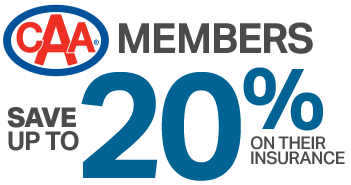
- CAA Members can SAVE up to 20% on Auto and Home Insurance
- Access to multiple insurance markets; knowing you get the best coverage at the best rate
- Confidence and security of being a member of a preferred group
- Local, fast and efficient 24/7 Claims Service
- Legal Assistance
- Health Assistance
Get Newfoundland’s best leisure vehicle protection.
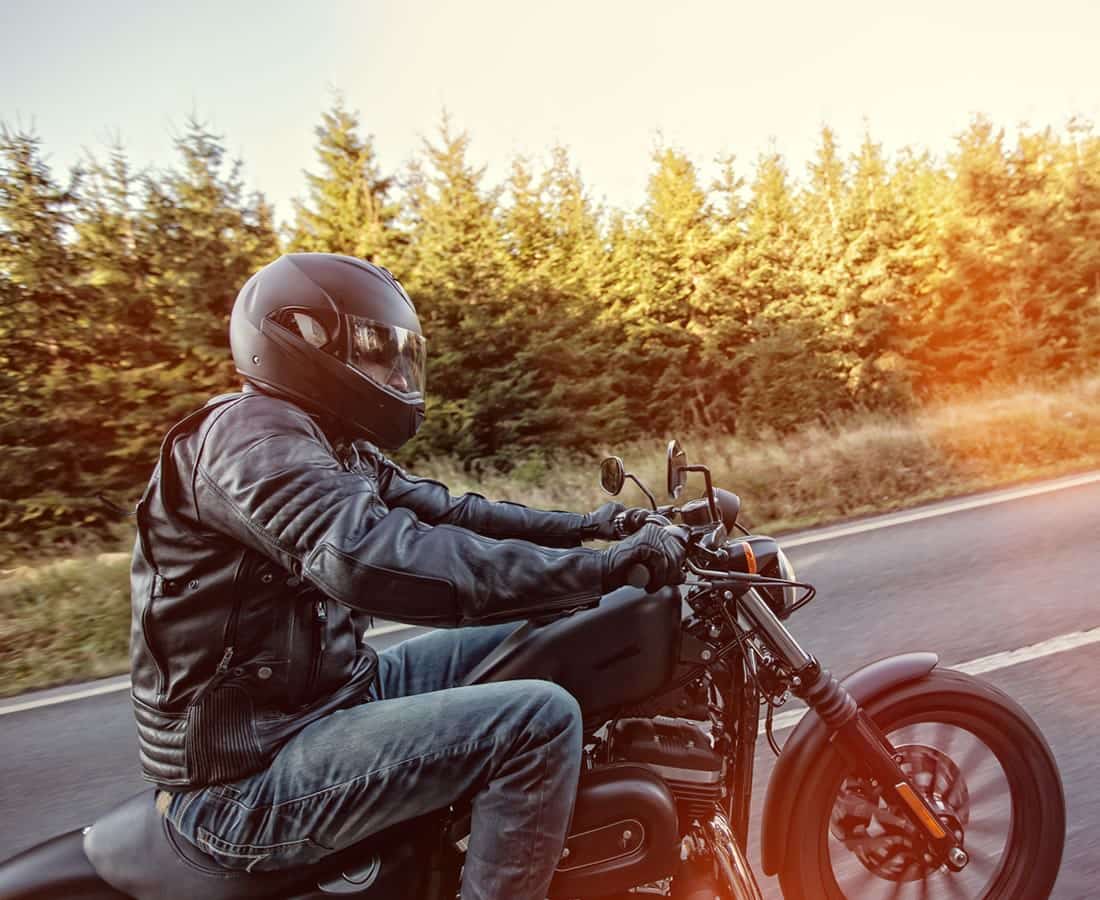
Newfoundlanders love their leisure time and their leisure vehicles. MyRide Leisure Insurance from Munn Insurance is the most competitive, comprehensive leisure vehicle insurance available in Newfoundland. Whether it’s your ATV, motorhome, motorcycle – or any of your leisure vehicles – A Munn policy offers more protection and value than any other program you’ll find.
- Boat and Watercraft
- ATV
- Snowmobile
- Classic Cars and Auto
- Motorhome, RV and Trailer
- Motorcycle

Car insurance laws in Corner Brook.
Corner Brook drivers must be in possession of legally determined minimum insurance coverage to drive on our roads. These minimum limits have been enacted to ensure drivers are financially responsible if an at-fault accident occurs.
Current limits for auto insurance in Corner Brook are:
- $200,000 in liability coverage per accident
- Uninsured and unidentified motorist coverage
Corner Brook drivers are not required to carry accident benefits coverage, although most do choose to buy this coverage, which includes coverage for medical payments, disability coverage, and death benefits coverage. This type of insurance is mandatory in other provinces. Many drivers in Newfoundland also opt to increase their liability coverage to limit risk and financial exposure.
There are also other optional coverages that can be purchased. These include comprehensive and collision coverage to protect in the event of an at-fault accident or non-accident scenario such as theft.

Corner Brook car insurance – your questions answered.

Our Latest Advice
How to Talk to Your Kid About E-Bike and E-Scooter Safety
E-bikes and e-scooters are giving young people more freedom — and putting them into traffic at higher speeds. Here are the conversations parents should be having about helmets, visibility, speed, traffic and safe riding.
E-bikes and e-scooters have quickly become part of everyday life for a lot of young people.
Maybe your kid already has one. Maybe they have been riding it all summer. Maybe they use it to get to a friend’s house, around the neighbourhood, to school or simply to hang out with friends.
And maybe most of the safety conversation so far has been:
“Wear your helmet.”
That is important. But there is a lot more to talk about.
E-bikes and e-scooters can move quickly and put young riders into situations with cars, trucks, pedestrians and other riders where judgement and awareness matter.
IWK Child Safety Link has raised concerns about the growing use of these devices by young people and recommends that children under 16 not operate e-scooters, citing the strength, coordination, judgement and experience needed to operate them safely.
So how do you bring all of that up without turning it into a lecture?
Every parent knows their own kid and will have their own way of talking about safety. But if you are looking for a way to start the conversation — or wondering what you should cover — here are a few ideas.
Start With the Difference Between Fun and a Toy
There is nothing wrong with acknowledging the obvious.
E-bikes and e-scooters are fun.
They give kids independence and make it easier to get around without asking Mom or Dad for a ride.
But there is an important distinction worth talking about: something can be fun without being a toy.
Once an e-bike or e-scooter is travelling on or around a roadway, the rider is interacting with cars, trucks, cyclists and pedestrians.
One way to put it might be:
“I know you enjoy riding it, and I want you to. I just want you to remember that once you’re around traffic, you have to treat it differently than something you’re riding around the driveway.”
The point is not to scare them. It is simply to make sure they recognize that the consequences of a mistake can be more serious when speed and traffic are involved.
They May Not Want to Have This Conversation
Your kid may not be particularly interested in sitting down to talk about e-bike or e-scooter safety.
That is probably not surprising.
But there is a useful comparison you can make.
If they wanted to drive a car, they would not simply be handed the keys and sent onto the road. They would have to study the rules, pass a written test, get a learner’s permit, practice driving with supervision and demonstrate that they can handle a vehicle safely before driving on their own.
An e-bike or e-scooter is obviously different from a car. But some of the same thinking applies.
These devices can put a young rider into traffic at significant speed, often with much less protection than they would have inside a vehicle. They need to understand the rules of the road, know how to react around cars and pedestrians, recognize dangerous situations and develop good riding habits.
In some ways, there may be even less room for error.
One way to put it might be:
“If you were learning to drive, you’d have to learn the rules and practice before you could head out on your own. This isn’t exactly the same, but you’re still sharing the road with cars and moving pretty quickly. I just want to make sure you know how to do it safely.”
That can help shift the conversation away from “Mom or Dad doesn’t trust me” toward “this is something I need to know how to operate responsibly.”
And you do not need to turn it into a formal lesson.
A few conversations about traffic, speed, visibility and what to do in common situations can go a long way.
Talk About Speed in Situations They Understand
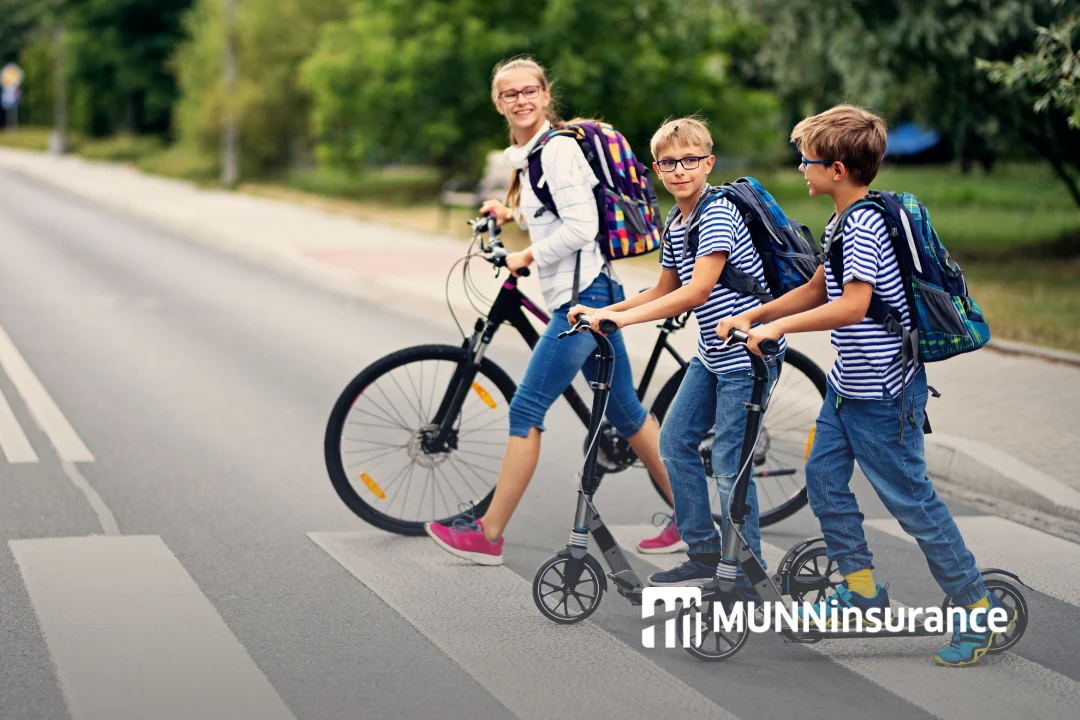
Telling a teenager to “slow down” may not accomplish much on its own.
It can be more useful to talk about when and why speed matters.
An e-bike or e-scooter travelling at 30 km/h covers more than eight metres every second. That means a rider can arrive at a driveway, intersection or turning vehicle much sooner than either the rider or driver expects.
Try talking through situations they encounter all the time:
- coming up to an intersection;
- passing driveways;
- riding alongside parked cars;
- moving around pedestrians;
- riding in rain or on wet pavement; and
- heading home as daylight begins to fade.
A simple message might be:
“Just because it can go that fast doesn’t mean that speed makes sense everywhere.”
It changes the conversation from “don’t go fast” to “think about where you are and adjust.”
Give Them One Rule to Remember: Never Assume a Driver Sees You
If there is one idea worth reinforcing, it may be this:
Never assume a driver sees you.
Young riders naturally see the world from their own perspective.
They see the car.
They may see the person behind the wheel.
They may think the driver is looking directly at them.
But the driver may also be watching other vehicles, checking a mirror, looking for pedestrians or preparing to make a turn.
And an e-bike or e-scooter can approach faster than the driver expects.
You could put it this way:
“You can see the car. That doesn’t necessarily mean the person driving it has seen you.”
That one idea can lead naturally into conversations about slowing down at intersections, watching driveways and being predictable around vehicles.
Use Your Own Neighbourhood as the Example
You don’t necessarily need a formal sit-down conversation.
The streets your child already rides can provide all the examples you need.
There may be a driveway around the corner with a tall hedge.
A busy intersection on the way to a friend’s house.
A street lined with parked cars.
A store parking lot that is always busy.
When you are driving together, ask a question:
“Could that driver see you if you were coming down the sidewalk or road right now?”
Or:
“What would you do if that car started backing out?”
Or:
“If the car at that intersection suddenly turned, where would you go?”
These are not trick questions.
The idea is to get your child thinking about situations before they encounter them at speed.
Talk About Riding With Friends
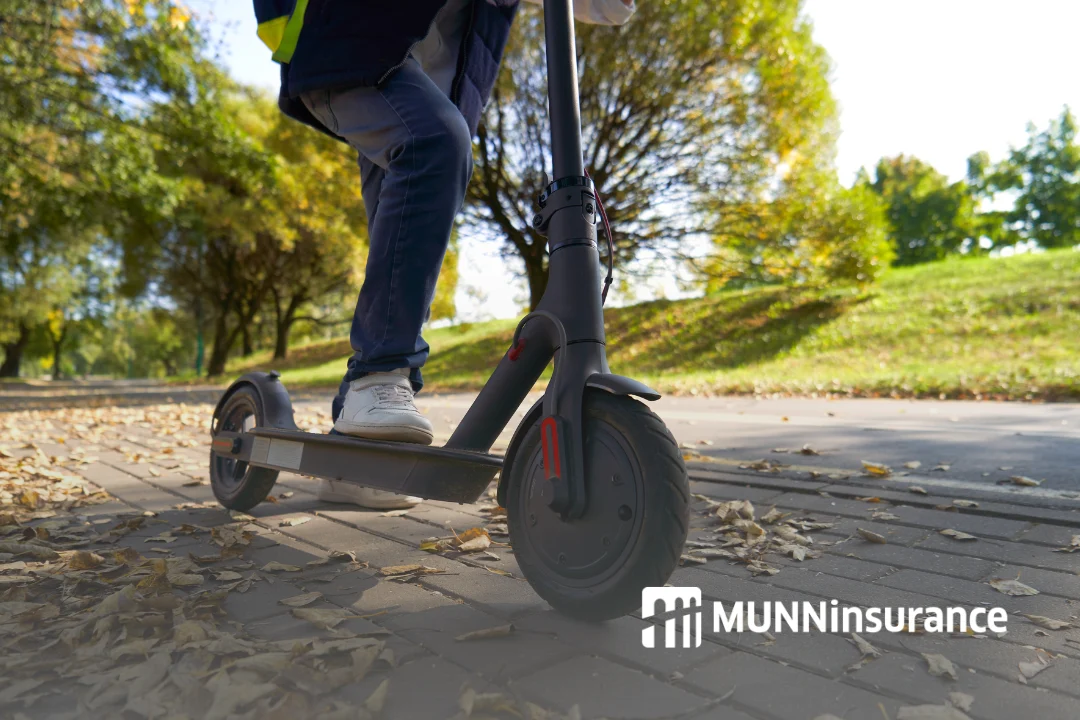
A group of friends out on e-bikes and e-scooters can be a pretty normal sight now.
And riding with friends is part of the fun.
It is also worth talking about how being in a group can change the way people behave.
Kids may ride side by side, race, try to keep up with someone on a faster device or simply focus more on their friends than on traffic.
One useful point to cover is:
“If your friend crosses the road, you still have to look for yourself.”
The fact that the first rider made it through an intersection does not mean the next rider can safely follow.
Another is:
“You don’t have to keep up with someone who is riding faster than you want to.”
It is a simple way to talk about peer pressure without making it a bigger parenting lecture.
Talk About Dusk Before It Gets Dark
Many kids are out on e-bikes and e-scooters in the late afternoon and evening.
That is often when visibility starts getting more difficult for drivers.
Dark clothes, trees, parked vehicles, shadows, wet roads and oncoming headlights can all make a relatively small rider harder to see.
One way to explain it:
“Being able to see the cars doesn’t mean the people driving those cars can see you as well.”
That gives you an opportunity to talk about lights, bright or reflective clothing and slowing down as visibility gets worse.
In Newfoundland and Labrador, RCMP reminds bicycle and e-bike riders that when riding between one-half hour before sunset and one-half hour after sunrise, the bike is required to have a white front light and a red rear light or red rear reflector.
Talk About the Helmet — Without Making It the Whole Conversation
The helmet is an obvious place to start, but it should not be where the safety conversation ends.
IWK Child Safety Link notes that head injuries are the leading cause of serious injury and death among children using wheeled activities and says a properly fitted and correctly worn helmet can significantly reduce the risk of serious head injury.
Families will decide how they set their own rules, but helmet use is certainly one worth discussing clearly.
And there is another point kids should understand:
Wearing a helmet doesn’t make risky riding safe.
It provides important protection if something does go wrong.
Don’t Forget the Phone and Earbuds
This one should be easy for most parents to relate to because it is essentially the same conversation we have about distracted driving.
At 25 or 30 km/h, looking at a phone for a few seconds means travelling a considerable distance without really watching where you are going.
Headphones and earbuds can also make it harder to hear vehicles, horns and other warning sounds.
Instead of simply saying “no phones,” you might agree on a very practical rule:
“If you need to check your phone, pull over somewhere safe and stop first.”
Easy to understand. Easy to remember.
Make Sure They Know the Basic Rules of the Road
Knowing how to operate an e-bike or e-scooter does not necessarily mean a young rider knows all of the rules that apply to it.
In Newfoundland and Labrador, RCMP reminds bicycle and e-bike riders to obey traffic signs and lights, travel on the right side of the road in the same direction as traffic, signal turns and stay off sidewalks. Bikes must also have at least one working brake.
Nova Scotia has specific rules for electric kick-scooters, while local municipalities can establish additional requirements.
And the rules applying to an e-bike may not be identical to those applying to an e-scooter.
So this can be something parents and kids look at together rather than parents simply reciting another set of rules:
“Let’s make sure we actually know where you are allowed to ride this and what the rules are.”
That may be particularly useful given how quickly these devices have become popular and how regulations continue to evolve.
Ask Questions Instead of Asking “Do You Understand?”
Most parents know what happens when you finish explaining something and ask:
“Do you understand?”
The answer is usually:
“Yes.”
You may learn more by asking a few practical questions instead.
“What would you do if a car started backing out of a driveway?”
“What do you assume when you see a car waiting to turn?”
“What do you do when it starts getting dark?”
“What if your friends are riding faster than you?”
“What do you do if you need to check your phone?”
It doesn’t have to feel like a test.
The idea is simply to get them thinking and talking too.
Before the Next Ride: A Simple Safety Checklist
You certainly don’t need to stand at the front door with a clipboard every time your child leaves the house.
But if you’re looking for a quick list of things to talk through together, these are good places to start:
- Helmet properly fitted and worn.
- Front and rear lights working.
- Know where you’re going and where you’re permitted to ride.
- Follow stop signs, traffic lights and other rules of the road.
- Slow down around intersections, driveways, parked cars and pedestrians.
- Never assume a driver sees you.
- Ride predictably — don’t weave through traffic or make sudden moves.
- Don’t race or feel you have to keep up with faster friends.
- Keep the phone away while moving.
- Make sure you can hear what’s happening around you.
- Make yourself easier to see, particularly around dusk.
- Know how fast your e-bike or e-scooter can actually go.
- If a situation doesn’t feel safe, slow down, stop or get off and walk.
You may have other rules that make sense for your child, their age, where you live and how they use the device.
The checklist is simply a starting point.
Know What Is Sitting in Your Garage
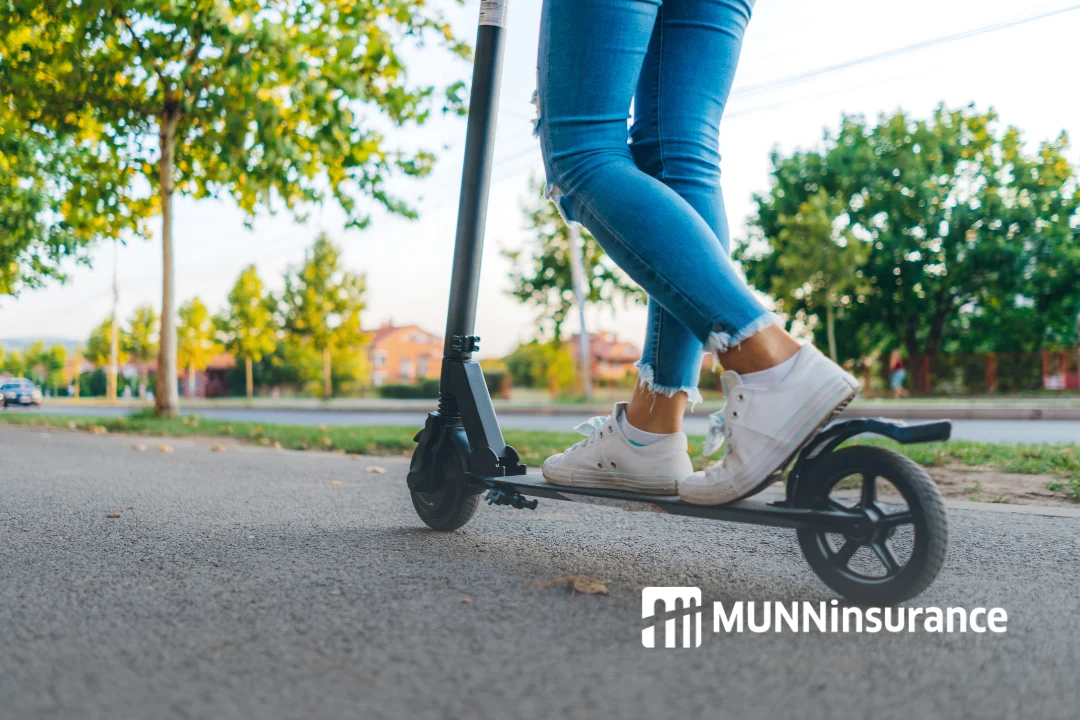
There is one other part of the conversation that is probably worth having with yourself.
How much do you know about the e-bike or e-scooter your child is riding?
What is its maximum speed?
How quickly does it accelerate?
Are the brakes working properly?
Does it have functioning lights?
Can its speed settings be changed?
Has your child changed them?
Is it intended for one rider?
Your kid may actually know more than you do about how the device works.
That is okay.
But understanding what it is capable of can help you have a much more informed conversation about how and where it should be used.
It Doesn’t Have to Be One Big Conversation
Perhaps the most important thing is that none of this needs to happen in one big sit-down safety lecture.
There will be plenty of natural opportunities.
You see someone riding dangerously while you’re in the car together.
Talk about it.
You hear about an e-bike or e-scooter collision in your community.
Ask what your child thinks happened.
They tell you about a close call.
Listen and talk it through.
The goal isn’t to make young people afraid of e-bikes and e-scooters or to take away the independence they enjoy.
It is simply to help them develop the judgement that goes along with that independence.
Looking Out for Each Other
At Munn Insurance, we believe being part of a community means more than helping people when something goes wrong. It also means helping raise awareness about risks we are seeing and doing what we can to help prevent injuries before they happen.
E-scooters and e-bikes are changing the way young people get around, and all of us are still adjusting. If you are looking for a way to start the safety conversation with your child, we hope some of these ideas help.
Talk about it. Keep the conversation going. And look out for each other.
Because safer streets and safer communities are something we all have a stake in.
E-Scooters and E-Bikes Are an Emerging Risk on Our Streets: What Drivers, Parents and Young Riders Need to Know
E-scooters and e-bikes are an emerging risk on our streets, [...]
Does Car Insurance Cover Hitting a Moose or Deer? What Drivers in NL and NS Need to Know
A moose steps onto the highway in front of you. [...]
A New Insurance Benefit for IUOE Local 727 Members: Better Coverage, Service, and Savings
As part of our ongoing commitment to providing value to [...]