Save on car insurance in Nova Scotia.
Save on car insurance in Nova Scotia.
We’re one of Nova Scotia’s largest independent brokers. We specialize in auto insurance. With a simple online quote or a quick call, you will get quotes from up to eight insurance companies. And with savings of up to 30%, you’ll be on the road with Nova Scotia’s best auto protection and benefits. That’s a promise.
Switch to Munn
It’s Simple 😉
Real people.
Our customers love to save.
Real people.
Our customers love to save.
Unique benefits of a Munn Insurance auto policy.
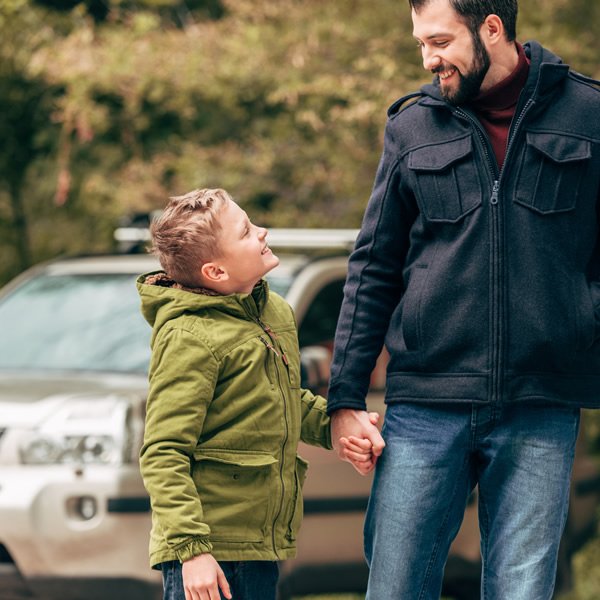
Great additional features that come standard with your car insurance policy from Munn Insurance:
- Unbeatable customer care – we will show you the love
- Easy monthly payments – unparalleled convenience
- Discounts, discounts and more discounts – too many to list them all
- Accident forgiveness – the best available
- Local, fast and efficient 24-7 claims service
- Combine your home and auto policy and save on both – most companies only give the home discount
- Industry leading new vehicle 30-month depreciation waiver – which is insurance speak for “more money in your pocket!”
Compare auto insurance quotes in Nova Scotia — and just see what you can do with the savings!
Compare auto insurance quotes in Nova Scotia — and just see what you can do with the savings!
In Nova Scotia, auto insurance is available from a wide array of private companies who compete with one another to allow consumers to shop around for a better rate. As an independent broker, Munn Insurance can provide you with quotes from up to eight insurance companies. By calling Munn, or going online for a quote, customers in Nova Scotia can easily compare car insurance rates and find the best car insurance and save on their auto insurance premiums.
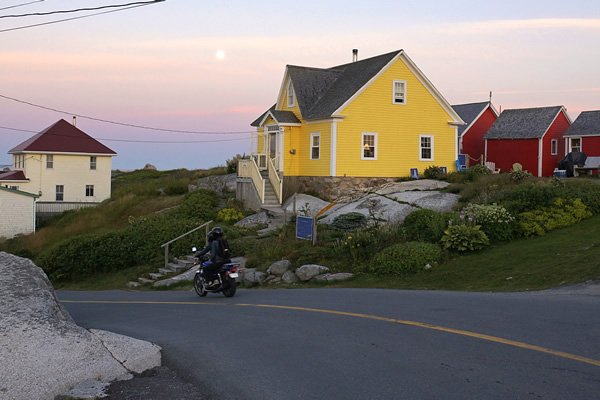

We do the shopping. You get the savings.
Customers love choice. And they love saving too! At Munn Insurance, we deliver on both. As an independent insurance broker, we shop our extensive network of insurance partners to provide our customers with choices to provide the best coverage at the best rate. Some of the insurance companies we search for our customers include:

Recent Auto Insurance Quotes in Nova Scotia




How Munn Insurance saves you money.
We work for you – that’s what an insurance broker does. We shop the market on your behalf, so Munn insurance can offer you the most access to the best discounts from our insurance partners.
- Bundling (Auto + Home Discount)
- Multiple Vehicle Discounts
- Experienced Drivers Discount
- Safe Drivers Discount
- Claims-Free Discount
- Loyalty Discount
- And Many More


Combine your home and car policies and save.
With Munn Insurance, home and auto policies are better together. It means extra savings and additional coverage. So combine them both and receive a discount on both. That’s like a double discount!
Combining also gives you the extra convenience of aligned renewal rates and less paperwork.
You can combine your auto policy with any Munn Insurance home policy for the following dwelling types:
- Private Homes
- Condos
- Tenants
- Cabins/Cottages
- Rented Dwellings

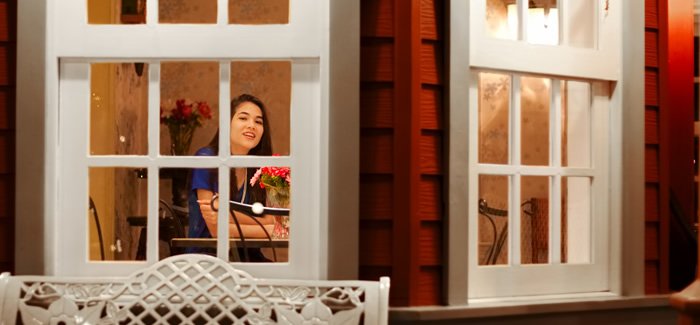
Special discounts and savings with a Munn Insurance Group policy.
We recognize the value groups provide to Newfoundland communities. First Responders, Health Care Professionals, Alumni Associations, Educators and Instructors all play a vital role in helping others across the Island. They give so much, and we’re happy to give back. Munn Insurance Preferred Groups in Newfoundland are able to take advantage of special discounts and many extra-valuable benefits.
- Special Group Discounts
- Mortgage & Real Estate Assistance
- 0% Insurance Financing
- Home Repair Assistance
- Legal Assistance
- Health Assistance









Get Nova Scotia’s best leisure vehicle protection.
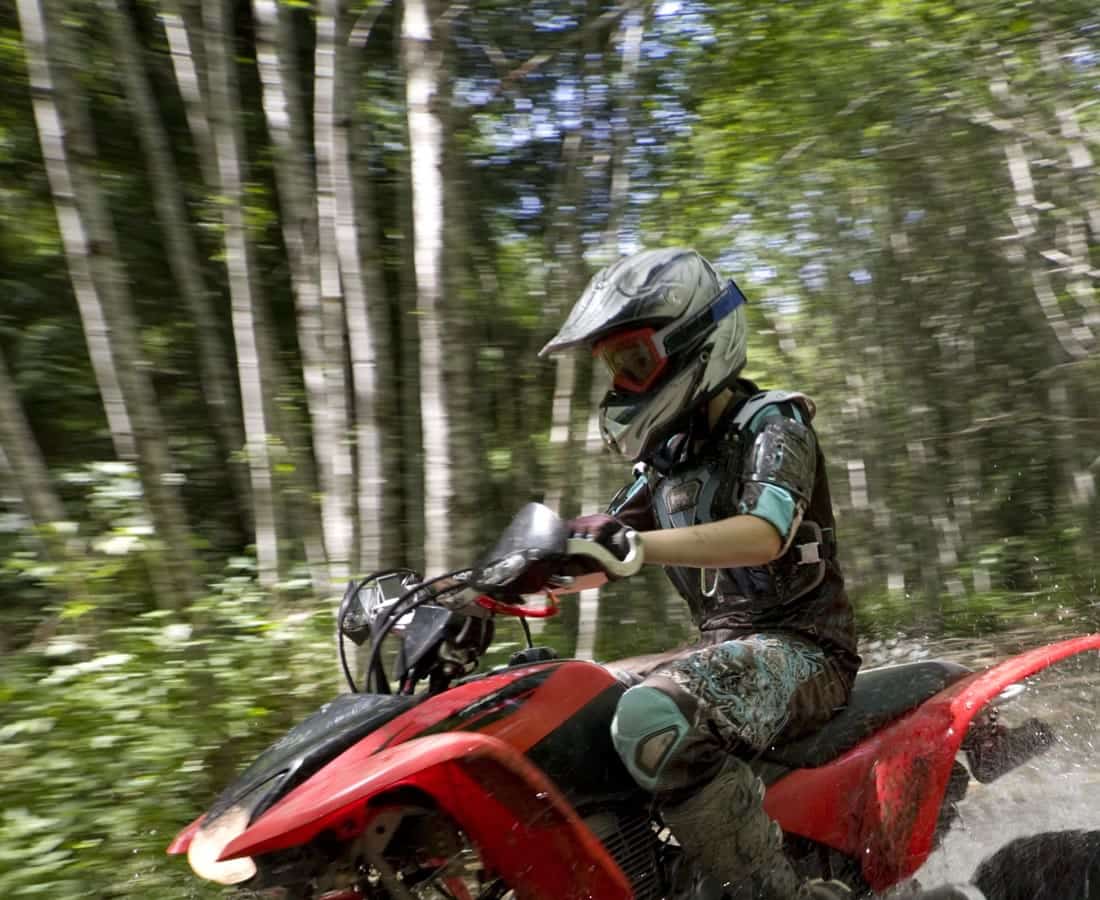
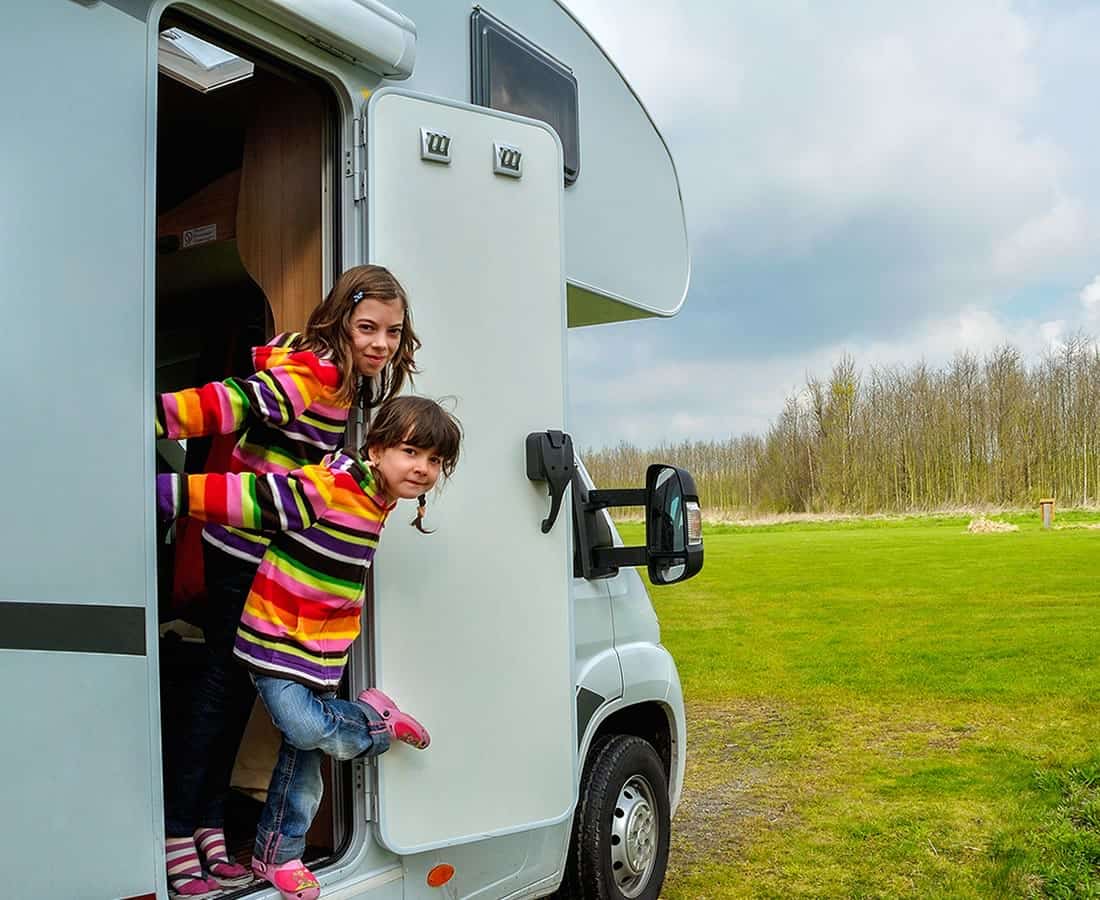
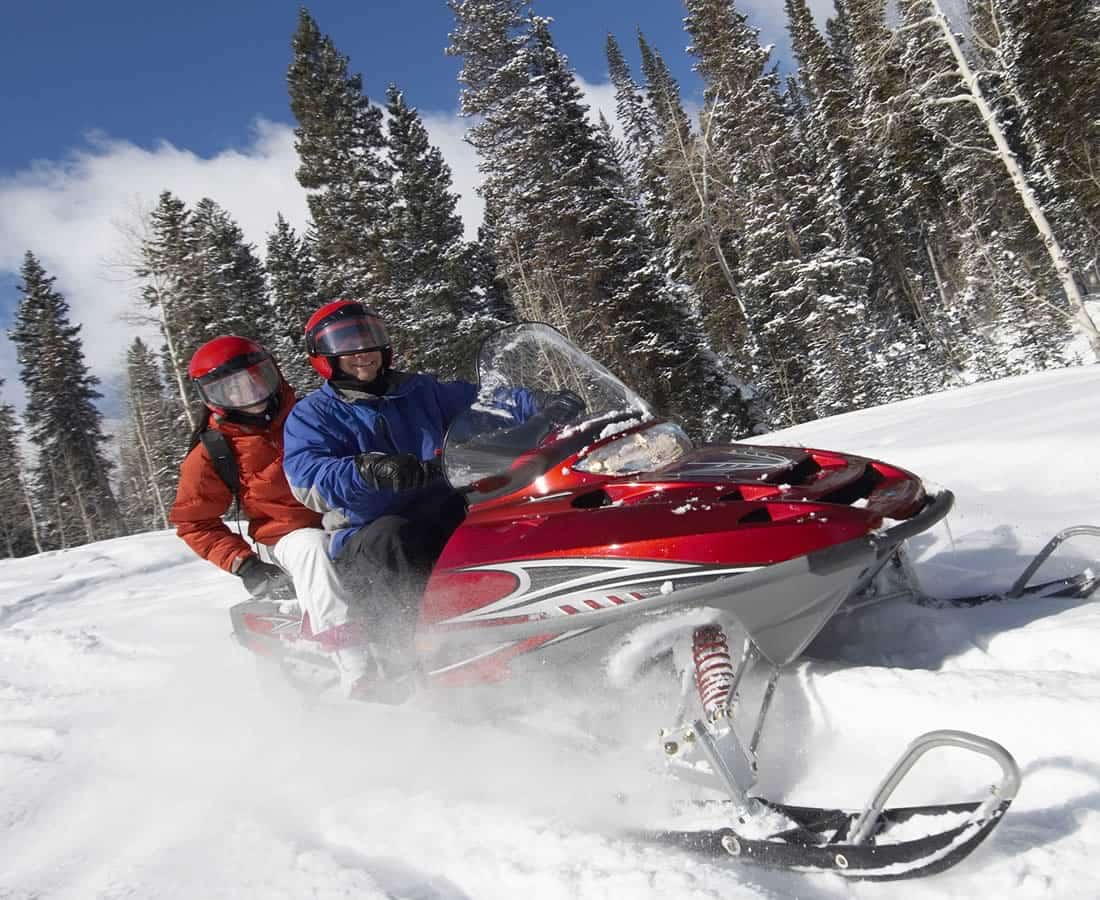
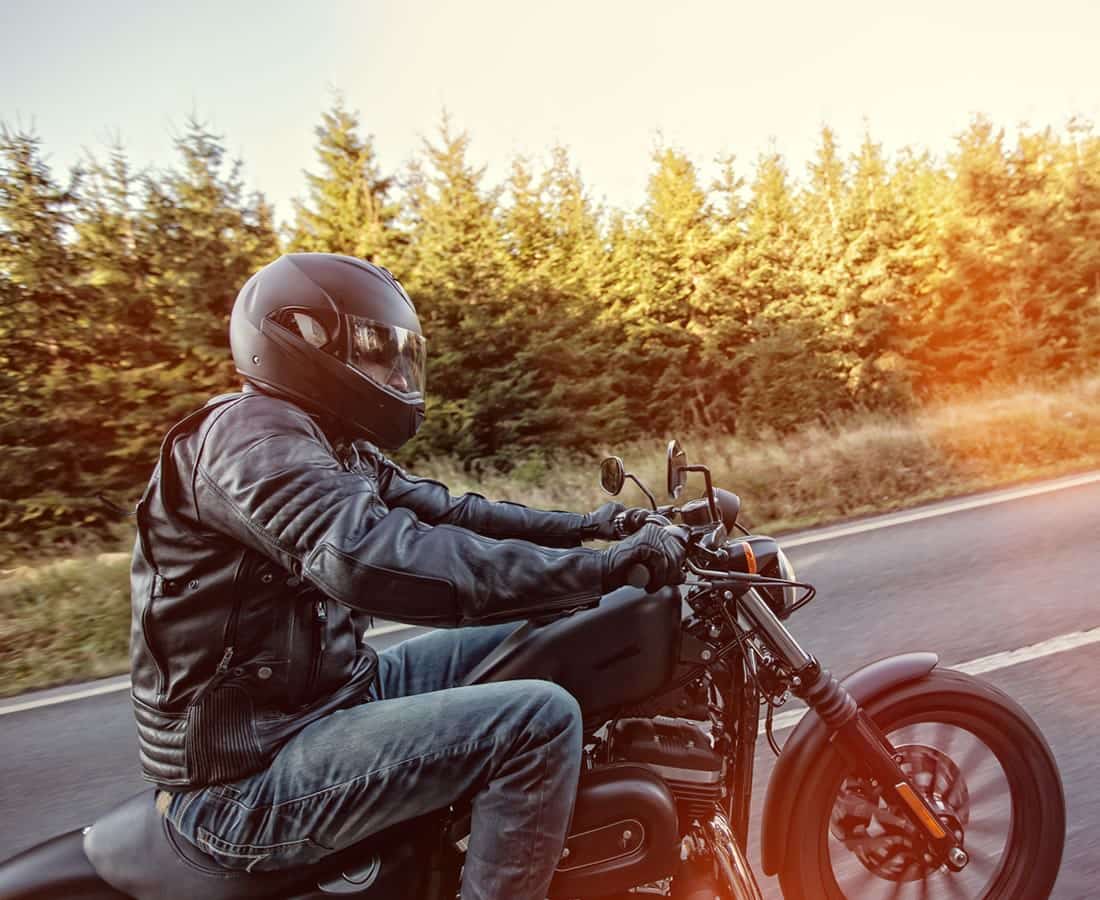
Nova Scotians love their leisure time and their leisure vehicles. MyRide Leisure Insurance from Munn Insurance is the most competitive, comprehensive leisure vehicle insurance available in Nova Scotia. Whether it’s your ATV, motorhome, motorcycle – or any of your leisure vehicles – A Munn policy offers more protection and value than any other program you’ll find.
- Boat and Watercraft
- ATV
- Snowmobile
- Classic Cars and Auto
- Motorhome, RV and Trailer
- Motorcycle


Car insurance laws in Nova Scotia.
It is mandatory to have auto insurance for all vehicles in Nova Scotia. The province has enacted “financial responsibility laws” to ensure drivers are accountable for the financial consequences of their actions while on our roads.
Current limits for auto insurance in Nova Scotia are:
- $500,000 liability coverage
- $50,000 medical payments coverage
- $2,500 funeral benefits
- Disability income/death benefits for persons injured or killed in an auto accident
- Uninsured and unidentified driver insurance
Nova Scotia has a no-fault based insurance system. This means drivers can file claims with their own insurance company, regardless of who is at fault for the accident. In addition, the province does not take age or marital status into account when determining risk.


Nova Scotia car insurance – your questions answered.

Our Latest Advice
E-Scooters and E-Bikes Are an Emerging Risk on Our Streets: What Drivers, Parents and Young Riders Need to Know
E-scooters and e-bikes are an emerging risk on our streets, putting more young riders into traffic with cars, trucks and SUVs.
They are convenient, fun and increasingly popular. But they can also move surprisingly fast, be difficult for drivers to see and put young riders with limited road experience into situations where one bad decision can have serious consequences.
And this isn’t simply a message for kids.
Drivers need to slow down and stay alert. Parents need to talk about safety. And young riders need to understand that when they take an e-scooter or e-bike onto the street, they are part of traffic.
Injuries Are Rising — Especially Among Young Riders
The growing popularity of e-scooters and e-bikes is being accompanied by a concerning increase in injuries.
Canadian Institute for Health Information data shows that the number of people hospitalized with e-scooter injuries between April 2025 and March 2026, is up almost 40 per cent.
The increase among children is even more concerning. Hospitalizations involving children 15 and under nearly tripled in one year. Fractures and head and brain injuries were among the most common reasons riders were hospitalized.
These are not simply scraped knees and bruises.
They include broken bones, serious head injuries, surgery, extended hospital stays and, in the most tragic cases, death.
The Canadian Paediatric Surveillance Program has raised similar concerns about severe injuries involving powered personal mobility devices, including e-scooters and e-bikes. In 2025, paediatricians reported 57 severe cases involving children and youth, including 10 deaths, 12 intensive-care admissions and 26 prolonged hospitalizations. Head injuries accounted for 47 per cent of the cases.
Atlantic Canada Is Seeing the Warning Signs
Atlantic Canada is not immune.
Health professionals in Halifax have been raising concerns about the issue for some time. An IWK emergency physician and trauma team leader described a summer of unprecedented e-scooter injuries, including serious fractures to the face, arms and legs, injuries requiring surgery and life-changing head injuries. She said both the number and severity of injuries being seen were alarming.
Those concerns are growing as the devices become more common.
IWK Health now takes the position that children under 16 should not operate e-scooters. Its Child Safety Link says these devices can travel as fast as 32 km/h and notes that children under 16 generally do not have the judgement, strength, coordination or experience required to operate them safely. IWK also cautions that e-scooters and e-bikes should not be confused with children’s toys or traditional non-powered scooters and bicycles.
And here in Newfoundland and Labrador, we are seeing the issue play out on our own streets.
We Are Seeing It Here at Home

On September 4, 2026, VOCM reported that an RNC officer had encountered approximately 40 or more young people riding e-bikes and e-scooters in the St. John’s area.
The officer later came across a collision involving two young riders, ages 11 and 12. Police checked on the riders, spoke with the children and their parents, and issued a summary offence ticket to one of the young operators. RNC also used the incident to ask parents to speak with their children about the safe use of e-bikes and e-scooters.
That incident follows several others involving young riders this summer.
On Canada Day, RNC responded to two separate scooter collisions. In Corner Brook, an eight-year-old boy riding an e-scooter was struck by a reversing vehicle. A few hours later in Mount Pearl, a 13-year-old boy was struck while riding a scooter across a roadway.
Then, on July 29, a 12-year-old e-scooter rider suffered non-life-threatening injuries in a collision with an SUV in St. John’s. The vehicle left the scene.
No single incident defines the problem. But taken together with what hospitals and injury-prevention experts are seeing across Canada, they reinforce an important point:
This is an emerging road-safety issue. Its real. Its serious. And it is already showing up on our streets.
These Aren’t Just Toys
That may be one of the most important messages for parents and young riders.
An e-scooter can look like a toy.
An e-bike can look much like an ordinary bicycle.
But adding an electric motor changes the equation.
Some of these devices can travel at speeds approaching 30 km/h or more. At 30 km/h, a rider is travelling more than eight metres every second.
That matters when approaching an intersection.
It matters when coming out of a driveway.
It matters when riding beside parked vehicles.
And it matters when a driver looks, believes the road is clear and begins to turn or pull out.
A young rider can reach that vehicle much sooner than the driver expects.
Being able to operate the throttle or controls does not necessarily mean a child has the judgement, road knowledge or traffic awareness to deal safely with an unexpected vehicle, pedestrian, pothole or intersection at speed.
Drivers: Expect Young Riders to Be There
For drivers, one of the biggest changes may simply be learning to expect e-scooters and e-bikes on neighbourhood streets.
A residential road where you once expected to see a child slowly pedalling a bicycle may now have a young rider approaching much faster.
That means looking carefully before backing out of a driveway.
Take another look before turning at an intersection or crossing a bike lane. Watch for riders emerging from behind parked vehicles. Be particularly cautious around playgrounds, schools and neighbourhoods where children gather.
And pay extra attention around dusk.
A young rider on an e-scooter or e-bike has a small profile. Add fading daylight, dark clothing, trees, parked vehicles, wet pavement or oncoming headlights and they can become much harder to see.
RNC has specifically reminded motorists to reduce speeds in residential areas, avoid distractions, share the road and watch for cyclists and scooter riders.
Slow down. Look twice. Give riders room. Expect the unexpected.
A driver has a seat belt, airbags and the structure of a vehicle around them.
A young person on an e-scooter or e-bike does not.
Parents: This Needs to Be More Than a Helmet Conversation
Helmets matter.
But keeping kids safe on an e-scooter or e-bike requires more than telling them to put one on.
Parents should know exactly what their child is riding and whether they even should be driving a motorized vehicle in the first place.
How fast can it go? How powerful is it? Where are they riding it? Are they riding alone or with friends? Are they going out around dusk or after dark? Are they riding on sidewalks, streets or through intersections? Do they know and follow the rules of the road?
And most importantly, do they understand what it means to mix with traffic?
Talk about the situations they are likely to encounter.
A driver backing out of a driveway may not see them.
A turning vehicle may cross their path.
A parked car door can suddenly open.
A driver may see them but completely misjudge how quickly they are approaching.
Riding with a group of friends can create another challenge. Kids may ride side by side, follow each other through intersections, weave around traffic or simply become more focused on their friends than on what is happening around them.
Parents need to set clear expectations around where, when and how these devices are used.
And know the capabilities of the device before your child gets on it.
An e-scooter or e-bike capable of carrying a young person into traffic at significant speed deserves rules that match the risk.
Riders: Never Assume a Driver Sees You
If you ride an e-scooter or e-bike, remember one thing every time you head out:
Never assume a driver sees you.
You might see the car.
You might even see the driver looking in your direction.
That does not mean the driver has noticed you, understood how quickly you are travelling or figured out what you are about to do.
Be predictable.
Wear a properly fitted helmet. Use your lights. Wear bright or reflective clothing when visibility is poor. Slow down around intersections and driveways. Put your phone away. Avoid headphones or earbuds that prevent you from hearing what is happening around you. Do not weave through traffic or suddenly change direction.
And follow the rules of the road.
Know the Rules in Newfoundland and Labrador
RCMP Newfoundland and Labrador reminds cyclists, including e-bike operators, that they have the same rights and duties as drivers of motor vehicles and are required to follow the Highway Traffic Act.
Among its safety and enforcement reminders, RCMP tells bicycle and e-bike riders to:
stay off sidewalks, obey traffic signs and lights, ride on the right side of the road in the same direction as traffic, and signal turns;
use a white front light and a red rear light or reflector when riding between one half-hour before sunset and one half-hour after sunrise;
ensure the bicycle has at least one working brake;
wear an approved helmet; and
remain at the scene and identify themselves when required following a collision.
RCMP says violations of applicable Highway Traffic Act requirements can result in fines.
The rules around e-scooters and other electric mobility devices are still evolving in Newfoundland and Labrador. In August 2026, the Provincial Government specifically identified e-bikes, e-scooters and other micromobility devices as one of four priority areas in its Highway Traffic Act consultation, with feedback intended to inform legislative amendments for the fall sitting of the House of Assembly.
That makes it particularly important for parents and riders to understand that the rules may depend on the type of device being used.
Nova Scotia Has Rules for E-Scooters Too
Nova Scotia has already established provincial requirements for electric kick-scooters.
The province set a minimum operating age of 14, a maximum permitted speed of 32 km/h, helmet requirements and other operating restrictions. Municipalities can impose additional rules, including lower speed limits and restrictions on where e-scooters can be used.
In Halifax, for example, e-scooters are permitted on certain roadways, bicycle lanes and multi-use pathways, but not on sidewalks. The municipal maximum is 25 km/h on roadways and bike lanes and 15 km/h on multi-use pathways.
The important message for parents and riders in both provinces is simple:
Do not assume that because an e-bike or e-scooter can be purchased, it can be ridden anywhere, by anyone, at any speed.
Know what you own. Know where it can be ridden. And know the rules.
Our Streets Are Changing
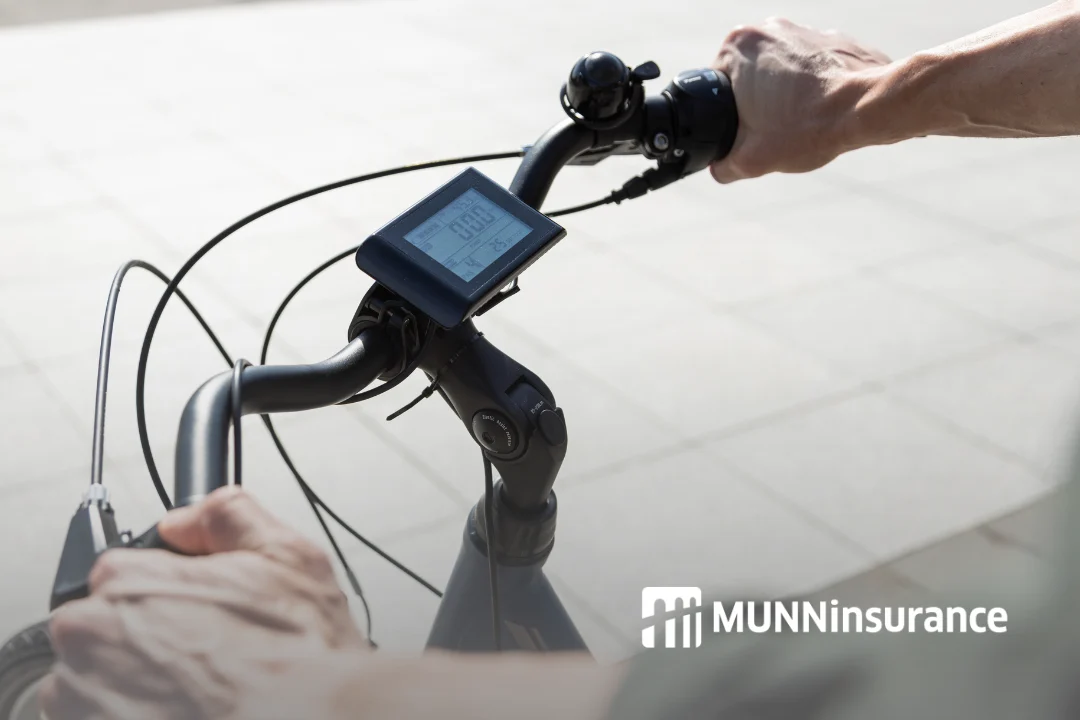
E-scooters and e-bikes are not going away.
They are convenient. They give young people independence. And they can be a fun and practical way to get around.
But they are also putting more young riders on faster electric devices into the same space as cars, trucks, pedestrians and traditional cyclists.
The injury numbers are rising. We are seeing collisions here at home. Police are issuing warnings and tickets. Governments are reviewing the rules. Health professionals are raising concerns.
This is an emerging road-safety issue, and everyone has a part to play.
Drivers, slow down and stay alert.
Parents, know what your kids are riding and make safety part of the conversation.
Riders, wear a helmet, stay visible, ride predictably and follow the rules of the road.
Looking Out for Each Other
At Munn Insurance, we believe being part of a community means more than helping people when something goes wrong. It also means helping raise awareness about risks we are seeing and doing what we can to help prevent injuries before they happen.
E-scooters and e-bikes are changing the way young people get around, and all of us are still adjusting. Drivers, parents and riders each have a role to play in making our streets safer.
Slow down. Talk about safety. Ride responsibly. And look out for each other.
Because safer streets and safer communities are something we all have a stake in.
Does Car Insurance Cover Hitting a Moose or Deer? What Drivers in NL and NS Need to Know
A moose steps onto the highway in front of you. [...]
A New Insurance Benefit for IUOE Local 727 Members: Better Coverage, Service, and Savings
As part of our ongoing commitment to providing value to [...]
Do You have a Child Heading Away to School? What Parents Need to Know About Auto Insurance
Heading off to college or university brings a long list [...]