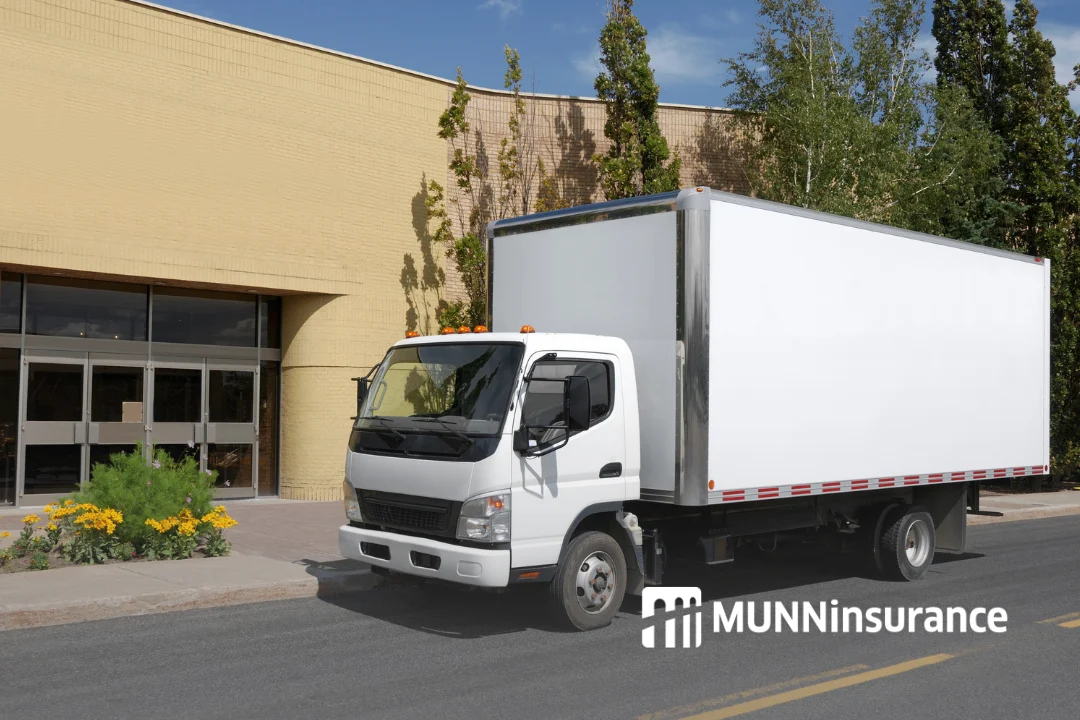
Are You Paying Too Much for Commercial Auto Insurance? 7 Ways to Help Lower Your Cost
Commercial Auto Insurance is an important cost of doing business if you rely on cars, pickups, vans or trucks to keep your operation moving.
But that doesn’t mean you should simply accept whatever premium appears on your renewal.
Commercial Auto Insurance rates can change for many reasons. The vehicles you operate, who drives them, how they are used, your claims history, the coverage you carry and changes in the overall insurance market can all affect what you pay. Broader factors such as inflation and rising repair costs can also affect commercial insurance premiums.
Some of those factors are outside your control.
Others aren’t.
And sometimes the issue isn’t that your insurance is necessarily too expensive. It may be that your current policy or insurance company is no longer the best fit for your business.
So, are you paying too much for Commercial Auto Insurance?
Here are seven things to check — and some practical ways to help control your insurance costs without simply cutting important coverage.
1. Shop your Commercial Auto Insurance before renewal
One of the first questions to ask is:
When was the last time someone actually compared your Commercial Auto Insurance?
Insurance companies don’t all look at commercial vehicles and businesses the same way.
One insurer may be particularly interested in contractors and trades. Another may have a stronger appetite for service vehicles, company cars or certain types of fleets. Pricing, underwriting requirements and available programs can also change over time.
That means the insurer that was a good fit for your business three years ago may not necessarily be the best fit today.
Insurance Bureau of Canada recommends that businesses explore their options rather than simply assume their existing insurer is still providing the best combination of coverage and price.
This is one advantage of working with an independent insurance broker like Munn Insurance.
Rather than approaching one insurance company, Munn can compare Commercial Auto options from multiple insurers and look at both coverage and cost.
And don’t leave it until the last minute.
The more time your broker has before renewal to understand your business, review your current policy and explore the market, the better positioned they are to compare your options properly.
If you haven’t shopped your Commercial Auto Insurance in a while, your next renewal is a good time to see what else is available.
2. Make sure your policy accurately reflects your business today
Businesses change.
Insurance policies don’t always keep up.
Maybe you sold a vehicle six months ago.
An employee who regularly drove one of your trucks has left.
A vehicle is travelling considerably fewer kilometres than it used to.
You no longer make deliveries.
You have changed where a vehicle is stored or where it operates.
Or perhaps you have added several vehicles and your insurance should now be structured differently.
All of these things can matter.
Review your Commercial Auto policy and ask:
- Are all the vehicles listed still in use?
- Are the regular drivers current?
- Is the stated use of each vehicle accurate?
- Are the estimated annual kilometres still reasonable?
- Are vehicles operating in the same territory?
- Are you carrying or towing the same types of materials and equipment?
- Have you added or removed vehicles since your last review?
- Has anything else about your operation changed?
Your insurer needs accurate information about your business and vehicles. You should never understate your vehicle use or other information simply to reduce your premium.
But you also shouldn’t be paying based on information that is no longer accurate.
We recommend reviewing business insurance regularly as the business evolves because changes in operations can also change the risks and coverage requirements.
Keeping Munn up to date helps make sure your insurance reflects the business you are actually operating today.
3. Pay close attention to who is driving your vehicles

One of the biggest Commercial Auto risks isn’t the vehicle.
It is the person behind the wheel.
Driving records, experience, claims and convictions can all affect how an insurer views a Commercial Auto risk.
For that reason, driver selection should be part of both your hiring process and your insurance strategy.
A good driver-management program can include:
- Checking licences and driving records before allowing employees to operate company vehicles
- Confirming drivers have the appropriate licence for the vehicle
- Reviewing driving records periodically
- Establishing minimum driving standards
- Providing orientation and training
- Having clear rules around speeding and distracted driving
- Addressing unsafe driving behaviour
- Keeping your broker informed when regular drivers change
We recommend commercial vehicle operators establish driver screening and hiring policies, including standards around experience and traffic violations.
Some insurance companies may also offer favourable pricing or discounts based on driver records. One provider, for example, currently offers a conviction-free discount to eligible Commercial Auto customers.
A poor driving record can make Commercial Auto Insurance more expensive or make certain insurers less willing to write the business.
Good drivers, on the other hand, can help reduce one of the biggest long-term drivers of insurance cost which is claims.
4. Reduce claims through good driver and vehicle management
One of the most effective ways to help control Commercial Auto Insurance costs over time is also one of the simplest to understand:
Prevent accidents and claims whenever you can.
No business can eliminate every risk on the road, but there are practical things you can do.
A Commercial Auto safety program might include:
- Driver screening
- Defensive-driving training
- Distracted-driving policies
- Rules around personal use of company vehicles
- Safe backing and parking procedures
- Regular vehicle inspections
- Preventive maintenance
- Winter-driving procedures
- Accident-reporting procedures
- Reviewing accidents and near misses
We recommend preventive vehicle-maintenance programs, documented inspections, driver standards and formal policies around how commercial vehicles are operated. It notes that a documented risk-management program can make an organization a better risk to insure and may help reduce premium.
For businesses with several vehicles, telematics can also be one tool in a broader risk-management program.
Depending on the system, telematics can provide information about things such as speeding, hard braking, mileage, routes and other driving behaviour. That information can help a business identify potential problems and coach drivers before unsafe behaviour leads to a claim.
Some insurers also have telematics-based Commercial Auto programs. Aviva, for example, currently offers a fleet telematics program in which eligible customers can receive an automatic discount and potentially additional savings based on performance.
But telematics is only one tool.
The bigger objective is better driver behaviour, safer vehicles and fewer claims.
And avoiding a claim can save your business much more than the potential impact on your next insurance renewal. It can also mean avoiding deductibles, injuries, vehicle downtime, interrupted jobs and lost productivity.
5. Make sure you’re getting the discounts and credits available to you
Don’t assume every available discount or pricing credit is automatically being applied to your Commercial Auto policy.
What is available varies by insurance company, the type of vehicle and the way your business operates, but it is worth asking your broker what programs you may qualify for.
Depending on the insurer and eligibility requirements, these can include things such as:
- Multi-vehicle discounts
- Conviction-free discounts
- Commercial package or loyalty discounts
- Fleet or loss-prevention programs
- Telematics-based discounts or credits for eligible fleets
For example, one Commercial Auto insurer we work with offers multi-vehicle and conviction-free discounts for eligible customers in Newfoundland and Labrador. It also offers a Fleet Telematics program that can provide eligible fleet customers with discounts based in part on driving performance.
There can also be opportunities to save by placing multiple types of business insurance with the same insurer. IBC recommends asking about bundling commercial policies because some insurers may offer discounts when several business coverages are placed together.
Vehicle theft prevention is also worth discussing.
Theft experience can affect insurance costs, particularly for vehicles that are frequently targeted or expensive to replace. Approved anti-theft or recovery systems may qualify for savings with some insurers.
The important word is may.
Not every discount is available from every insurer, and eligibility can vary.
Ask Munn what discounts, credits or programs may be available for your vehicles and business.
6. Review your deductibles and optional coverage
Another way to affect your Commercial Auto premium is to review how much risk your business is retaining itself.
Your deductible is the amount you are responsible for paying when you make a covered claim before applicable insurance payments are made.
Increasing a deductible can sometimes lower the premium.
IBC specifically identifies higher deductibles as one potential way to reduce insurance costs, while also cautioning businesses to choose an amount they could comfortably afford to pay if a loss occurs.
That second part matters.
Saving some premium by moving to a much higher deductible doesn’t help if the deductible creates a cash-flow problem when you actually need to make a claim.
You should also review the optional physical-damage coverage on your vehicles.
For example:
- Does Collision still make sense on every vehicle?
- Does Comprehensive still make sense?
- Would All Perils be appropriate?
- Are deductibles appropriate for the values of the vehicles?
- Are older and newer vehicles being treated exactly the same even though their values are very different?
The right answer will vary.
A newer $75,000 work truck may justify a different approach than an older vehicle worth significantly less.
Financed and leased vehicles may also have coverage requirements that limit what you can change.
The goal is not to strip coverage out of the policy simply to get a cheaper premium.
It is to make sure the coverage you are paying for still makes sense for the vehicles and risks you have today.
Munn can review your deductibles and optional coverages with you and explain the trade-offs before you make a change.
7. Think about insurance before you buy your next vehicle — and review how your vehicles are structured

Commercial Auto Insurance should be part of the vehicle-buying conversation.
Not something you think about after you have already signed the purchase agreement.
Two vehicles that appear equally suitable for the business can have different insurance costs.
Vehicle factors such as make, model, year, value, theft experience and potential repair costs can influence what it costs to insure them. IBC says vehicle choice can have a major impact on insurance pricing and encourages drivers to consider insurability when buying or leasing a vehicle.
So, if you are choosing between two vehicles that can do the same job, ask Munn for an insurance indication before you buy.
As your business adds vehicles, you should also look at how the overall Commercial Auto policy is structured.
For example, adding more vehicles may make you eligible for:
- Multi-vehicle discounts
- Different insurer programs
- Fleet Insurance
- Fleet loss-prevention programs
- Telematics-based programs
A business that started with one pickup may eventually have five, 10 or 20 vehicles.
The insurance arrangement that worked when you had one vehicle may not be the best structure once the business has grown.
As your business changes, make sure your Commercial Auto Insurance changes with it.
So, are you paying too much for Commercial Auto Insurance?
There is no simple answer.
Two businesses could operate the same number of vehicles and still pay very different premiums.
Their drivers may be different.
Their claims histories may be different.
One may make local service calls while another travels long distances.
One may carry tools while another makes deliveries.
Their vehicles, deductibles, liability limits and optional coverages may all be different.
And they may be insured with companies that view their particular type of business differently.
That is why the best way to find out whether you are paying too much is not simply to compare your premium with another business.
It is to review your own operation and compare what is available in the market.
Seven things to check before your next Commercial Auto renewal
Before you renew, ask yourself:
- Have we compared our Commercial Auto Insurance options recently?
- Does our policy accurately reflect our vehicles and how we use them today?
- Are the right drivers listed, and are we actively managing driver risk?
- What are we doing to prevent accidents and claims?
- Are we receiving all of the discounts and credits we may qualify for?
- Do our coverage, limits and deductibles still make sense?
- Are we buying the right vehicles and structuring our Commercial Auto Insurance appropriately as the business grows?
If you’re not confident in the answers, it may be time for a Commercial Auto review.
Don’t focus on price alone
Everyone wants to pay less for insurance.
But the cheapest Commercial Auto policy is not necessarily the best value.
A lower premium doesn’t help much if it comes with a higher deductible you can’t comfortably absorb, lower limits than your contracts require or missing coverage that your business depends on.
The objective should be:
The right coverage at the right value.
That means understanding what you have, what you need and what you are paying for it.
Paying too much? Let Munn take a look.
At Munn Insurance, we don’t just look at what you’re paying for Commercial Auto Insurance.
We look at what you’re getting for what you’re paying.
We take the time to understand your vehicles, drivers, claims history, coverage and how your business operates. As an independent insurance broker, we can then compare Commercial Auto Insurance options from multiple insurance companies and look for opportunities to improve your coverage, your value — or both.
Already insured somewhere else? No problem.
Let Munn review your current Commercial Auto Insurance and see how it compares. There is no obligation to change.
Ready for a Commercial Auto Insurance review?
Visit www.munninsurance.com/business/commercial-auto-insurance-for-atlantic-canada/ or call 1-855-726-8627 to speak with a Munn commercial insurance specialist.
Don’t guess whether you’re paying too much. Compare your options. Get the right coverage. Get the right value.
Related News


Recent News

How Much Does Landlord Insurance Cost in Newfoundland and Labrador and Nova Scotia?
If you own a rental property, or are thinking about buying one, there is a good chance you have wondered: How much does landlord insurance cost? The short answer is that there is no single [...]
Are You Paying Too Much for Commercial Auto Insurance? 7 Ways to Help Lower Your Cost
Commercial Auto Insurance is an important cost of doing business if you rely on cars, pickups, vans or trucks to keep your operation moving. But that doesn’t mean you should simply accept whatever premium appears [...]

Fall Checklist for Landlords in Newfoundland and Labrador and Nova Scotia
Fall is one of the best times for landlords to take a close look at their rental properties. The temperatures are dropping, winter weather is coming, and small maintenance issues that are manageable in September [...]