When Do I Need a Fleet Insurance Policy?
If your business is growing from one or two work vehicles to several cars, pickups, vans or trucks, there comes a point when it may make sense to move from individually rated Commercial Auto Insurance to a fleet policy.
In Newfoundland and Labrador and Nova Scotia, a commercial fleet is commonly defined as five or more commercial or business-rated power units that meet the applicable provincial and insurer requirements.
But simply reaching five vehicles does not automatically mean every business will be insured the same way.
The vehicles need to qualify as a fleet, ownership and use matter, and insurers can have different underwriting requirements.
So when should you start talking to your broker about fleet insurance?
Usually, as you approach five business vehicles.
What is Fleet Insurance?
Fleet Insurance is a form of Commercial Auto Insurance designed to insure multiple business vehicles together.
Instead of looking at every vehicle entirely on its own, a fleet insurer can look at the vehicles and the business operation collectively.
That can include factors such as:
- The number and type of vehicles
- How the vehicles are used
- Where they operate
- Who drives them
- The business’s claims history
- The overall loss experience of the fleet
Often, qualifying fleet vehicles are assessed together rather than simply being rated individually.
For a growing business, that can make managing Commercial Auto Insurance easier and, depending on the operation and claims experience, potentially provide more favourable pricing.
How many vehicles do I need for Fleet Insurance?
A useful rule of thumb is five qualifying vehicles.
The words “power units” are important.
A power unit is essentially a self-propelled vehicle such as a:
- Car
- Pickup
- Van
- Service vehicle
- Commercial truck
A trailer is not self-propelled, so you generally cannot count four trucks plus one trailer and assume you now have a five-vehicle fleet. Lloyd’s Canada specifically notes that a trailer being towed cannot be used to make up the five vehicles required for a fleet definition.
There can also be differences between insurers and provincial rules, so five vehicles should be viewed as the point when you should ask your broker whether you qualify, rather than assuming a fleet policy automatically applies.
What if I have fewer than five vehicles?
You can still have Commercial Auto Insurance.
A business does not need a fleet to insure vehicles commercially.
If you have one, two, three or four work vehicles, they can generally be insured as individually rated commercial vehicles.
That could include:
- A contractor with two pickups
- A plumbing company with three service vans
- A landscaping company with four trucks
- A business with two company cars and a delivery van
Each vehicle is typically rated based on factors such as the vehicle itself, its use and the drivers associated with it.
As you get closer to five vehicles, however, it makes sense to involve your broker early.
If you know another vehicle is being added soon, your broker can look at whether the addition will change the way your Commercial Auto Insurance should be structured.
Running a single work vehicle? See what one-vehicle businesses in Atlantic Canada need to know.
Does every vehicle count toward a fleet?

Not necessarily.
Simply having five vehicles associated with a business owner does not automatically make them one commercial fleet. Generally, the vehicles need to have a legitimate connection to the business and meet the applicable requirements for the fleet.
For example, a business owner in Newfoundland or Nova Scotia might have:
- Three company pickups used on job sites
- One service van
- A personal family SUV
- A motorcycle
That does not necessarily mean there are six vehicles that can all be placed together on a commercial fleet policy. Some insurers note that only vehicles and drivers over which the business can exercise appropriate control should generally be included in the commercial fleet, and unrelated personal-use vehicles may not qualify.
This is another reason it is better to talk to your broker than simply count licence plates.
Why move to a Fleet Insurance policy?
Fleet Insurance is not simply about putting several vehicles on one piece of paper. It can change the way the insurer looks at your Commercial Auto risk.
Your vehicles can be considered together
With individually rated Commercial Auto Insurance, vehicles are generally assessed separately. With Fleet Insurance, the insurer can consider the overall fleet when assessing the risk. Claims experience, vehicle usage, geography, drivers and other factors can all contribute to the overall fleet rating.
It can make administration easier
Businesses with several vehicles are constantly making changes. You may be buying new vehicles, selling older ones, replacing damaged ones, adding or removing drivers, or moving employees between vehicles. A fleet structure can make managing a growing group of vehicles more efficient — particularly for Atlantic Canadian businesses in construction, trades, or delivery where vehicle turnover is common.
It may provide pricing advantages
Fleet Insurance can sometimes offer more competitive pricing because the insurer is evaluating the vehicles as a group rather than simply rating each one independently. Aviva identifies this as one potential advantage of fleet coverage. That does not mean moving to fleet automatically guarantees a lower premium. Your claims history, drivers, vehicles, operation and overall loss experience still matter.
Does Fleet Insurance mean every vehicle costs the same to insure?
Not necessarily.
A fleet may be assessed collectively, but the makeup of the fleet still matters. Five salesperson vehicles travelling locally are very different from five heavy-duty pickups hauling equipment between job sites across Newfoundland or Cape Breton.
Insurers may consider:
- Vehicle types and values
- Business use
- Distance travelled
- Operating territory
- Driver experience
- Claims frequency and severity
- The nature of the business
Adding a substantially different type of vehicle to your fleet can also affect the insurance. Adding another light-duty service van may be relatively straightforward. Adding a heavy commercial truck used for a significantly different purpose may create a different insurance exposure.
Your drivers matter just as much as your vehicles
A fleet policy is not simply a list of trucks and vans. The people driving them are a major part of the risk.
Insurance companies can look at:
- Driver experience
- Licence status
- Driving records
- At-fault accidents
- Traffic convictions
- Who regularly operates the vehicles
As a fleet grows, driver management becomes increasingly important. That means businesses should have a process for keeping driver information current and advising their broker when drivers are added or removed. A good claims record and strong approach to driver management can become particularly important as the size of the fleet increases.
Your claims history becomes increasingly important
Once vehicles are being insured as a fleet, insurers can pay close attention to the overall claims performance of the fleet. A single accident does not tell the whole story.
Insurers may look at patterns: how often claims are happening, what types of accidents are occurring, whether the same drivers are involved repeatedly, and whether losses are becoming more severe.
That means fleet insurance should increasingly become part of your business’s broader risk-management strategy, not just an annual insurance purchase.
See our Commercial Auto Claims Guide.
When should I start thinking about Fleet Insurance?
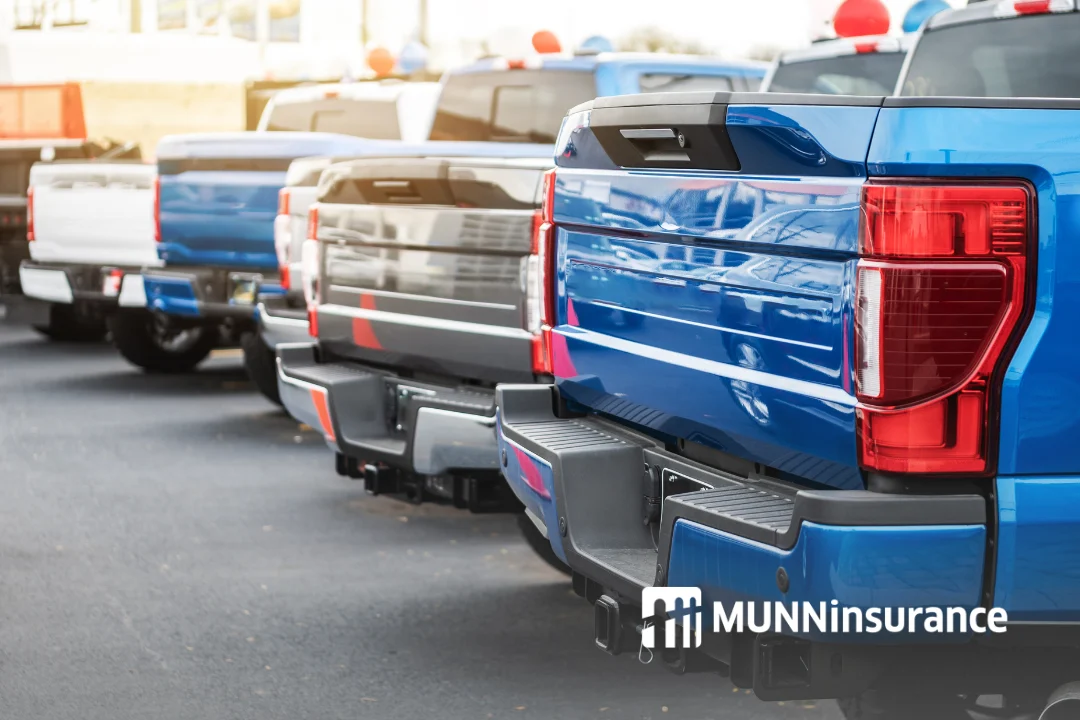
You don’t need to wait until the day you buy your fifth vehicle.
If your business currently has three or four commercial vehicles and you expect to grow, start the conversation with your broker.
- You have three vehicles and plan to add two this year → discuss the expected fleet structure now
- You currently have four vehicles and are ordering another truck → ask your broker whether adding it makes you eligible for Fleet Insurance
- You have five or more business vehicles insured individually → it may be worth reviewing whether a fleet arrangement is more appropriate
- Your fleet has grown quickly over the past few years → even if everything is already insured, a broader review of vehicles, drivers, coverage and pricing is overdue
The best time to review your options is before you make the next vehicle purchase or before your Commercial Auto renewal, rather than waiting until after your existing policy has renewed.
Growing from five vehicles to 10, 20 or more
Fleet Insurance can continue to evolve as your business grows. A five-vehicle contractor fleet operating across Newfoundland is different from a company running 15 service vans across Nova Scotia or 50 trucks province-wide.
As the number of vehicles increases, insurers may place greater emphasis on:
- Fleet loss history
- Driver screening and training
- Vehicle maintenance programs
- Telematics
- Safety policies
- Claims management
At Munn, we work with Atlantic Canadian businesses ranging from a single work vehicle to complex fleets with upwards of 100 vehicles and drivers. The insurance strategy that worked when you owned two vehicles may not be the right strategy when you own 10 or 20.
Is Fleet Insurance always cheaper?
Not necessarily.
Fleet Insurance can create pricing advantages for some businesses, but the word fleet does not automatically mean discount. Pricing still depends heavily on the quality of the risk. A fleet with experienced drivers and a strong claims record may be viewed very differently from a similar-sized fleet with frequent accidents and poor loss experience.
The right question is not simply: “Will a fleet policy be cheaper?” It is: “What is the best way to insure our vehicles based on our current operation?” Price matters, but so do coverage, limits, deductibles, insurer appetite and the way claims are handled.
Five vehicles is a good time for a Commercial Auto review
If your business is approaching five vehicles in Newfoundland and Labrador or Nova Scotia, that is a natural point to review your Commercial Auto Insurance. Look at:
- How many qualifying vehicles you have
- Whether additional vehicles are coming
- How each vehicle is used
- Who is driving them
- Your current claims experience
- Your liability limits
- Your physical-damage coverage
- Your deductibles
- Your current premium
- Whether your existing insurer remains the right fit
Your business may have outgrown the insurance structure that worked when you had one or two vehicles.
Frequently Asked Questions about Fleet Insurance
When does a business need fleet insurance in Newfoundland and Labrador or Nova Scotia?
In NL and NS, a commercial fleet is generally defined as five or more qualifying commercial power units. Once you approach that threshold, talk to your broker about whether your vehicles qualify and how coverage should be structured.
Does a trailer count as a vehicle for fleet insurance purposes?
No. A trailer is not a self-propelled power unit and cannot be counted toward the five vehicles required for a fleet definition in Newfoundland and Nova Scotia.
Is Fleet Insurance cheaper than insuring vehicles individually?
Not automatically. Fleet Insurance can offer pricing advantages because vehicles are assessed as a group, but pricing still depends on your claims history, driver records, vehicle types, and overall loss experience.
Can I include personal vehicles in my commercial fleet policy?
Generally no. Only vehicles with a legitimate business connection that the business can exercise appropriate control over are typically included in a commercial fleet policy.
How do I know if it’s time to move to a fleet policy?
If your business has three or four commercial vehicles and expects to add more, start the conversation with your broker before the next vehicle purchase or renewal. Don’t wait until you’re already at five.
Growing your fleet? Talk to Munn.
At Munn Insurance, we work with Atlantic Canadian businesses — across Newfoundland and Labrador, Nova Scotia, New Brunswick, and Prince Edward Island — with everything from a single work vehicle to large and complex commercial fleets.
If you are approaching five business vehicles, adding more vehicles, or wondering whether you should move to a fleet policy, we can review your operation and help determine the right structure. As an independent insurance broker, Munn can compare Commercial Auto and Fleet Insurance options from multiple insurance companies and help you understand the differences in coverage, structure and cost.
Is your business ready for Fleet Insurance?
Visit munninsurance.com/business/commercial-auto-insurance/ or call 1-855-726-8627 to speak with a Munn commercial insurance specialist.
One vehicle or a growing fleet. Get the right coverage. Get the right value. Keep your business moving.
Related News


Recent News

When Do I Need a Fleet Insurance Policy?
If your business is growing from one or two work vehicles to several cars, pickups, vans or trucks, there comes a point when it may make sense to move from individually rated Commercial Auto Insurance [...]

9 Ways to Lower Your Landlord Insurance Premium Without Cutting Coverage
Owning a rental property comes with plenty of expenses. Mortgage payments, property taxes, repairs, maintenance and insurance all affect the return on your investment. So it makes sense to look for opportunities to manage those [...]

What to Do After an Accident in a Company Vehicle: A Commercial Auto Claims Guide
An accident involving a company vehicle can create a lot of questions very quickly. Is anyone hurt? Do you need to call police? What information should the driver collect? Who needs to be notified? When [...]