Does Car Insurance Cover Hitting a Moose or Deer? What Drivers in NL and NS Need to Know
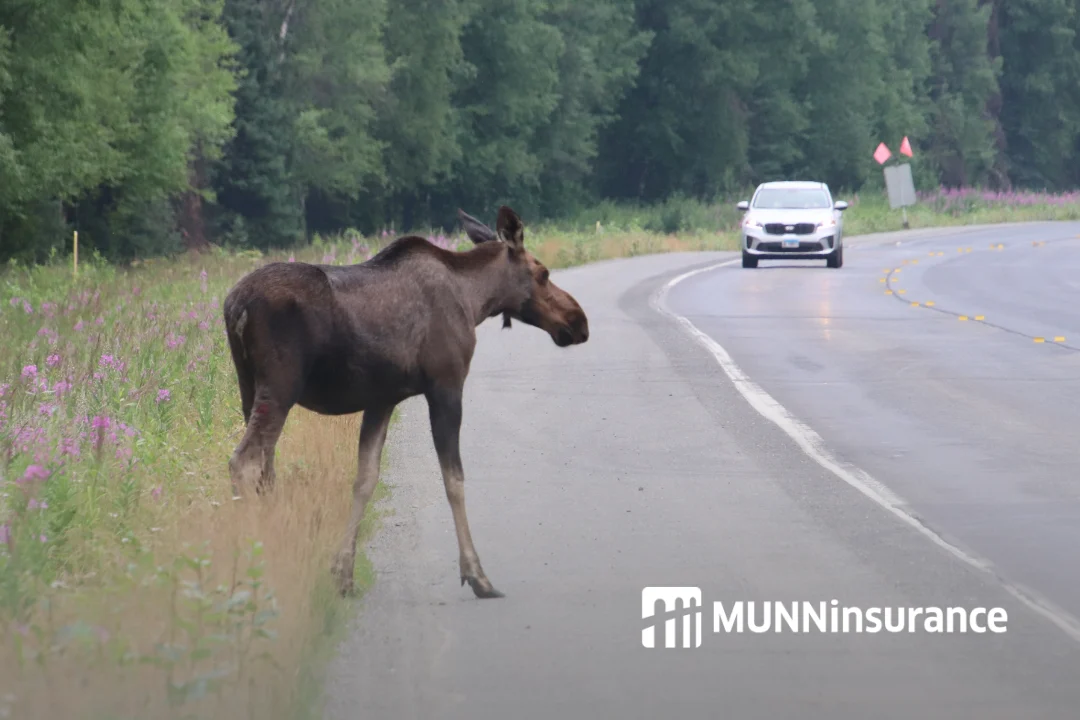
A moose steps onto the highway in front of you. A deer runs out from the side of the road. You have only seconds to react.
Wildlife collisions are a very real driving risk in Newfoundland and Labrador and Nova Scotia. And when they happen, the damage can be significant.
That raises an important insurance question:
If you hit a moose, deer or other animal, does your car insurance cover the damage?
In most cases, it can — but it depends on the coverage you have on your auto insurance policy.
For anyone who spends time driving outside our larger centres, encounters with wildlife are nothing unusual.
In Newfoundland and Labrador, moose warning signs are a familiar sight along the Trans-Canada Highway and secondary roads, and the province continues to use measures such as moose fencing and roadside brush clearing to help reduce the risk of collisions. Earlier this summer, the roadside sign in Terra Nova National Park was reporting 16 moose-vehicle collisions so far in 2026.
In Nova Scotia, deer and other wildlife are also a regular hazard on highways and secondary roads. The province has cautioned motorists for years about deer-vehicle collisions, and Nova Scotia RCMP has regularly reminded drivers to watch for deer and moose, particularly around dawn and dusk and during periods when wildlife is more active.
For drivers in both provinces, wildlife on the road is simply part of the reality of driving in Atlantic Canada — and sometimes there is very little time to react.
Does Car Insurance Cover Hitting a Moose, Deer or Other Animal?
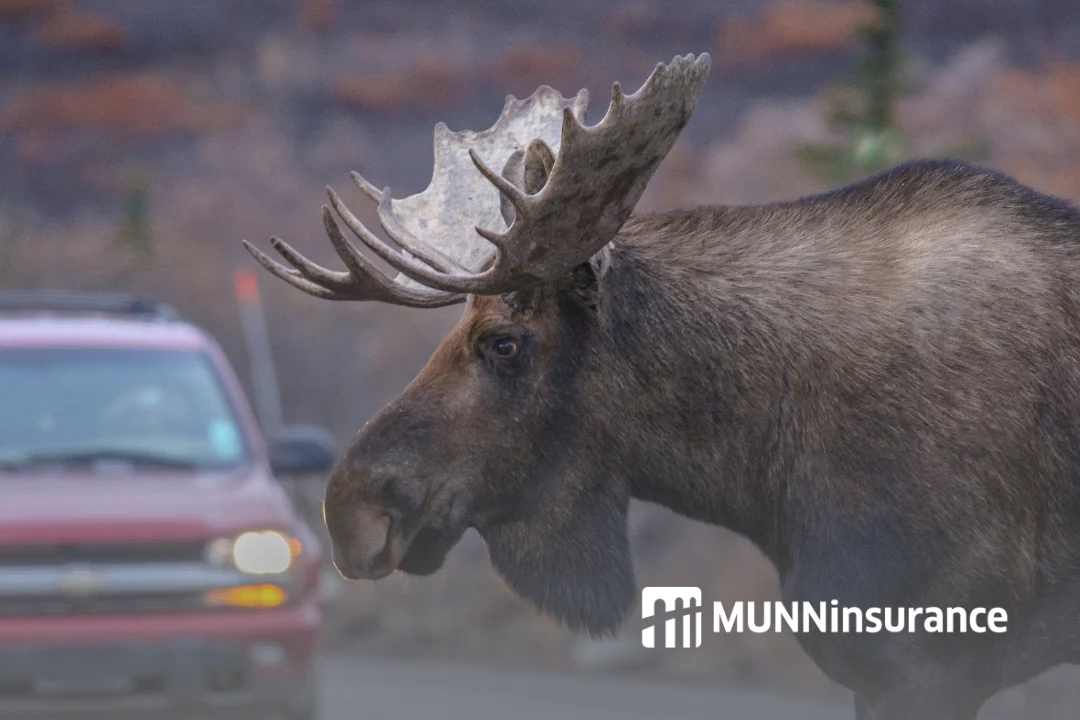
Generally, yes — if you carry Comprehensive coverage.
Comprehensive insurance is optional coverage that protects your vehicle against a number of losses other than a typical collision with another vehicle.
Depending on your policy, this can include things such as:
- Theft
- Vandalism
- Fire
- Hail and certain other weather damage
- Falling or flying objects
- Collision with an animal
So if you are driving along the Trans-Canada Highway and strike a moose, or hit a deer on a Nova Scotia road, damage to your vehicle would typically be handled under the Comprehensive portion of your policy, subject to the terms, conditions and deductible that apply.
The important point is that Comprehensive coverage is optional.
Simply having auto insurance does not necessarily mean damage to your own vehicle from hitting an animal is covered.
That is worth checking before you need it.
Will Hitting a Moose or Deer Affect My Insurance?
A direct collision with a wild animal is generally treated as a Comprehensive claim rather than an at-fault Collision claim.
That means it is not normally treated the same way as an accident where you are found responsible for colliding with another vehicle.
However, insurance companies have different underwriting rules, and your overall claims history can also be a factor when your insurance is reviewed.
If you have had a wildlife collision and are unsure whether to make a claim, talk to your broker. They can help you understand what coverage applies, what deductible you have and how the claim process works.
What About Your Deductible?
Comprehensive coverage normally comes with a deductible.
For example, if hitting a deer causes $5,000 in covered damage and your Comprehensive deductible is $500, you would normally be responsible for the first $500 and your insurer would cover the remaining eligible repair cost, subject to the terms of your policy.
With a large animal such as a moose, the damage can be extensive.
Even a collision with a smaller animal can be expensive to repair. Today’s vehicles increasingly have cameras, radar systems, sensors, headlights and other technology built into bumpers, grilles and surrounding body panels.
What initially looks like relatively minor damage can sometimes result in a significant repair bill.
So when reviewing your insurance, it is useful to know not only whether you have Comprehensive coverage, but also what deductible applies.
When Are Drivers Most Likely to Encounter Wildlife?
Wildlife can appear on the road at any time, but drivers should be particularly alert around dawn and dusk when visibility is lower and many animals are more active.
In Newfoundland and Labrador, moose are a particular concern during the warmer months and can be difficult to see on dark highways until you are very close to them.
In Nova Scotia, deer activity can also increase at different times of the year, particularly during the fall.
Regardless of the season, extra caution is a good idea whenever you are travelling through rural, wooded or known wildlife areas.
How Can You Reduce the Risk of a Wildlife Collision?
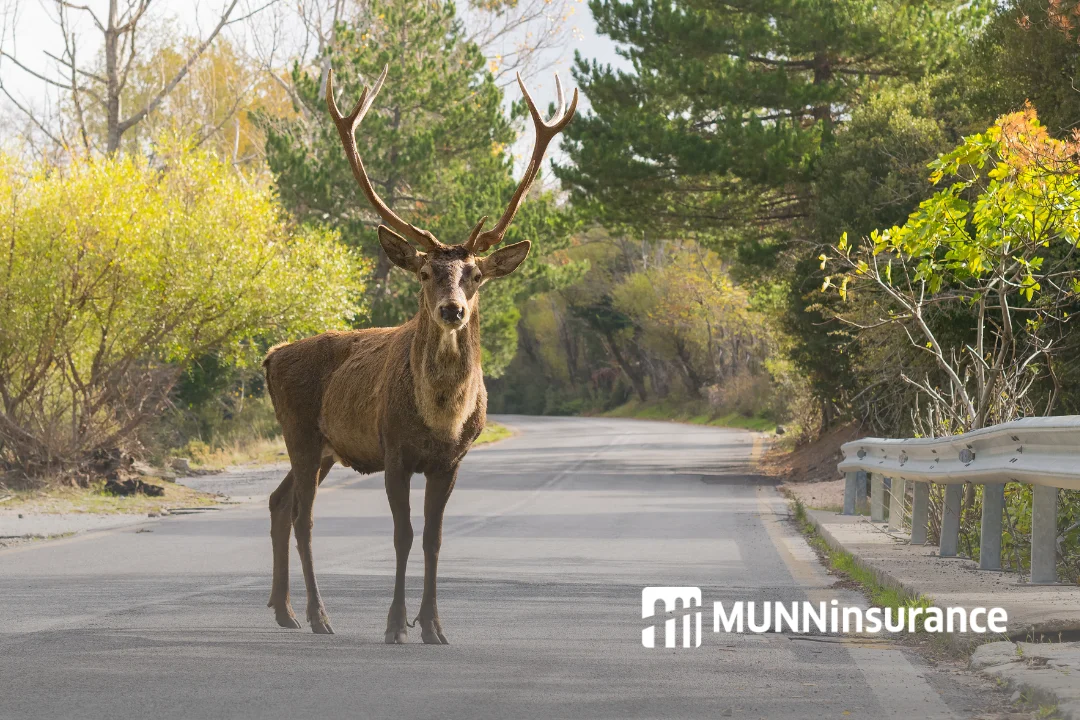
You can’t completely eliminate the possibility of encountering an animal on the road, but a few simple driving habits can give you more time to react.
- Slow down, particularly at night.
The faster you are travelling, the less time you have to respond when an animal suddenly appears. - Watch the sides of the road.
Scan the shoulders and tree line for movement rather than focusing only on the pavement directly in front of you. - Pay attention to wildlife warning signs.
They are there to alert you to areas where animals are known to cross or where the risk may be higher. - Use your high beams when appropriate.
On dark roads, high beams can help you see farther ahead when there is no approaching traffic. - Be especially alert around dawn and dusk.
Low light makes wildlife more difficult to see and can coincide with increased animal activity. - Slow down when you see an animal near the road.
Never assume it is going to stay where it is. Moose, deer and other wildlife can move into your lane without warning. - Avoid distractions.
Looking away from the road for only a few seconds can significantly reduce the time you have to react.
What Should You Do If You Hit a Moose, Deer or Other Animal?
If a wildlife collision does happen, your first priority should be safety.
- Get to a safe location if possible.
If your vehicle can be moved safely, get it out of active traffic and turn on your hazard lights. - Check for injuries.
Call 911 if you, your passengers or anyone else has been injured, or if the collision creates an immediate danger to other traffic. - Do not approach the animal.
An injured moose, deer or other wild animal may be frightened and unpredictable. - Document what happened.
When it is safe, take photos of the damage to your vehicle and the surrounding area. Make a note of where and when the collision occurred. - Report the collision when required.
Depending on the circumstances, you may need to contact police or wildlife authorities, particularly if the animal is injured, blocking the roadway or the collision involves significant damage or injuries. - Contact your insurance broker or insurer.
Report the accident as soon as practical and explain what happened. Your broker can confirm what coverage applies and help guide you through the claims process.
Do You Have Comprehensive Coverage? It’s Worth Checking.
Most of us don’t spend much time thinking about the difference between Collision and Comprehensive insurance.
Until we need it.
If you regularly travel highways and rural roads in Newfoundland and Labrador or Nova Scotia, wildlife is one of the reasons Comprehensive coverage can be an important part of your auto insurance policy.
And if you haven’t reviewed your policy recently, don’t simply assume you’re covered.
At Munn Insurance, we can review your existing auto insurance, explain the coverage you currently have and help you understand your options.
As an independent insurance broker, we also have access to multiple insurance companies, allowing us to compare coverage and rates and help find the protection that makes sense for you.
Have questions about your auto insurance? Call Munn Insurance at 1-855-726-8627 or get a free, no-obligation quote today.
Related News



Recent News

Fall Checklist for Landlords in Newfoundland and Labrador and Nova Scotia
Fall is one of the best times for landlords to take a close look at their rental properties. The temperatures are dropping, winter weather is coming, and small maintenance issues that are manageable in September [...]
Commercial Auto Insurance Isn’t Just for Fleets: What One-Vehicle Businesses Need to Know
Whether you have one work vehicle or a fleet of vehicles, you need Commercial Auto Insurance to make sure vehicles used for business purposes are properly protected. Commercial Auto Insurance is not just for trucking [...]
Does Landlord Insurance Cover Damage Caused by Tenants?
You walk into your rental property after a tenant moves out and find damaged flooring, a broken door, holes in the walls or water damage. One of the first questions you may have is: Does [...]