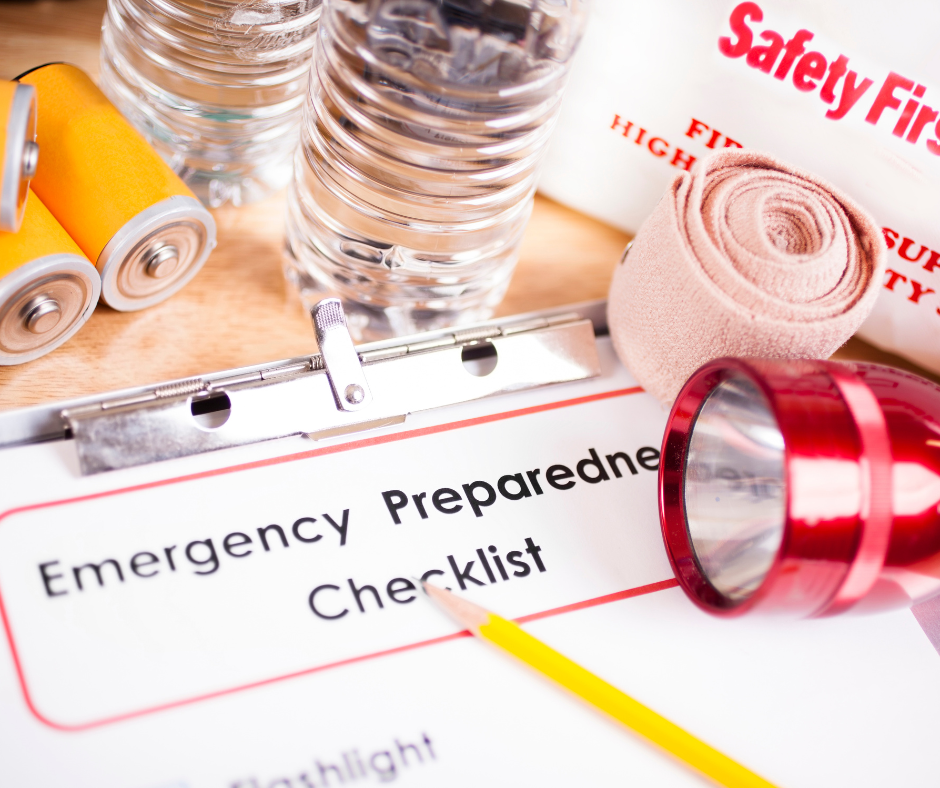
Emergency Supply Kit
While it is often not a priority until an emergency happens, you should put together your emergency supply kit long before a wildfire or other disaster occurs.
Keep it easily accessible so you can take it with you when you have to evacuate. Plan to be away from your home for an extended period, and each person should have a readily accessible emergency supply kit.
Ensure you plan with COVID-19 in mind.
Emergency Supply Kit Checklist
Face masks or coverings
- Three-day supply of non-perishable food and three gallons of water per person
- Map marked with at least two evacuation routes
- Prescriptions or special medications
- Change of clothing
- Extra eyeglasses or contact lenses
- Personal hygiene items
- An extra set of car keys, credit cards, cash or traveler’s checks
- First aid kit
- Flashlight
- Battery-powered radio and extra batteries
- Sanitation supplies
- Copies of important documents (birth certificates, passports, etc.)
For those with babies, toddlers and children consider:
- Formula
- Diapers
- Bottles
- Wipes
- Games, books, crafts
If you have a pet add:
- Pet food
- Water
- Bowls
- Leash
- Kennel
Items to take if time allows:
- Easily carried valuables
- Family photos and other irreplaceable items
- Personal computer information on hard drives and disks
- Chargers for cell phones, laptops, etc.
Related News


Recent News

Are Students Living Away for School Covered by Their Parents’ Home Insurance?
They may be. Dependents under age 21 who are temporarily living away from home while attending school may still have coverage under their parents’ or guardians’ home insurance policy. But families shouldn’t simply assume that [...]
Wildfire Preparedness in Atlantic Canada: Protecting Your Home, Cabin or Business
With the very recent situation in Kenmount Terrace, we are reminded of the dangers of wildfires...

Builder’s Risk Insurance: What Every Homeowner Should Know Before Construction Begins
Building a new home or undertaking a major renovation is an exciting milestone, but it also introduces risks that many homeowners don’t consider until it’s too late. One of the biggest misconceptions in residential construction [...]